
Last updated November 16, 2026
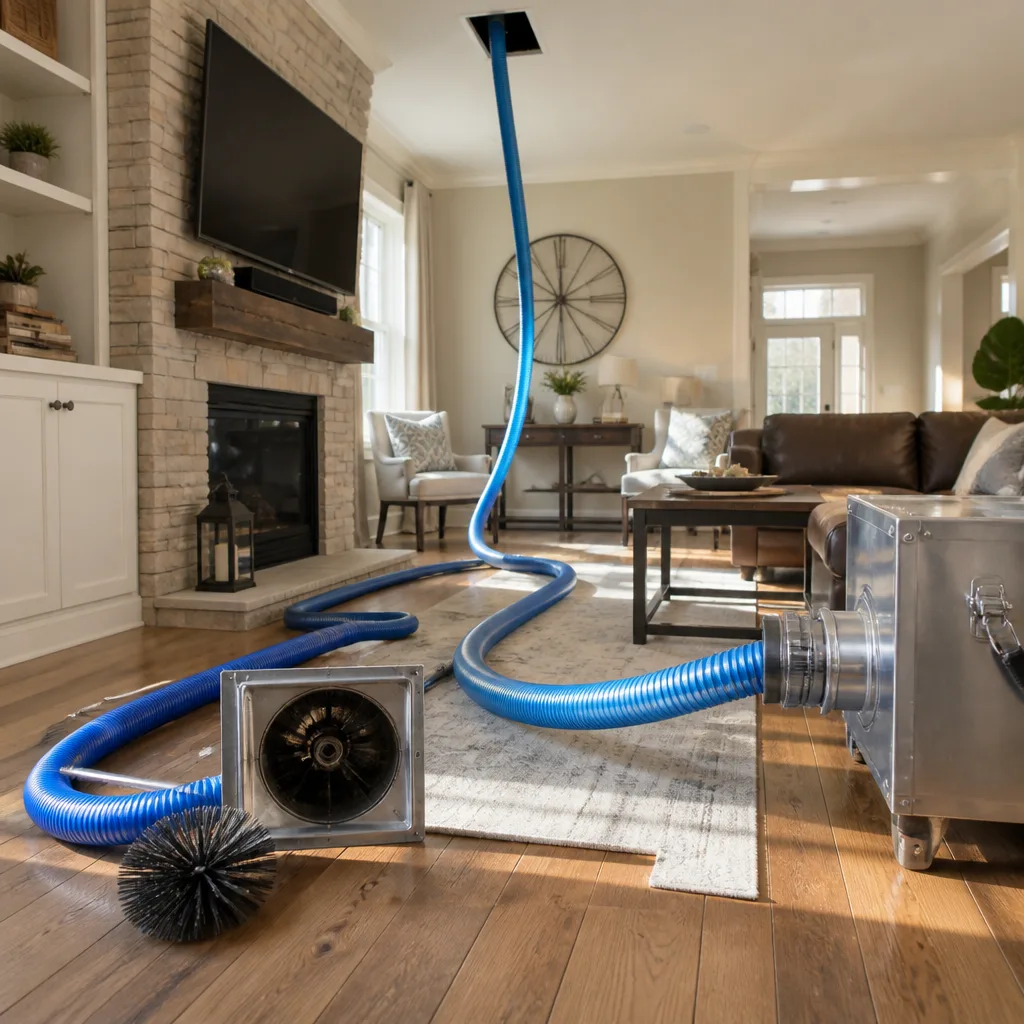 Whole-home duct cleaning
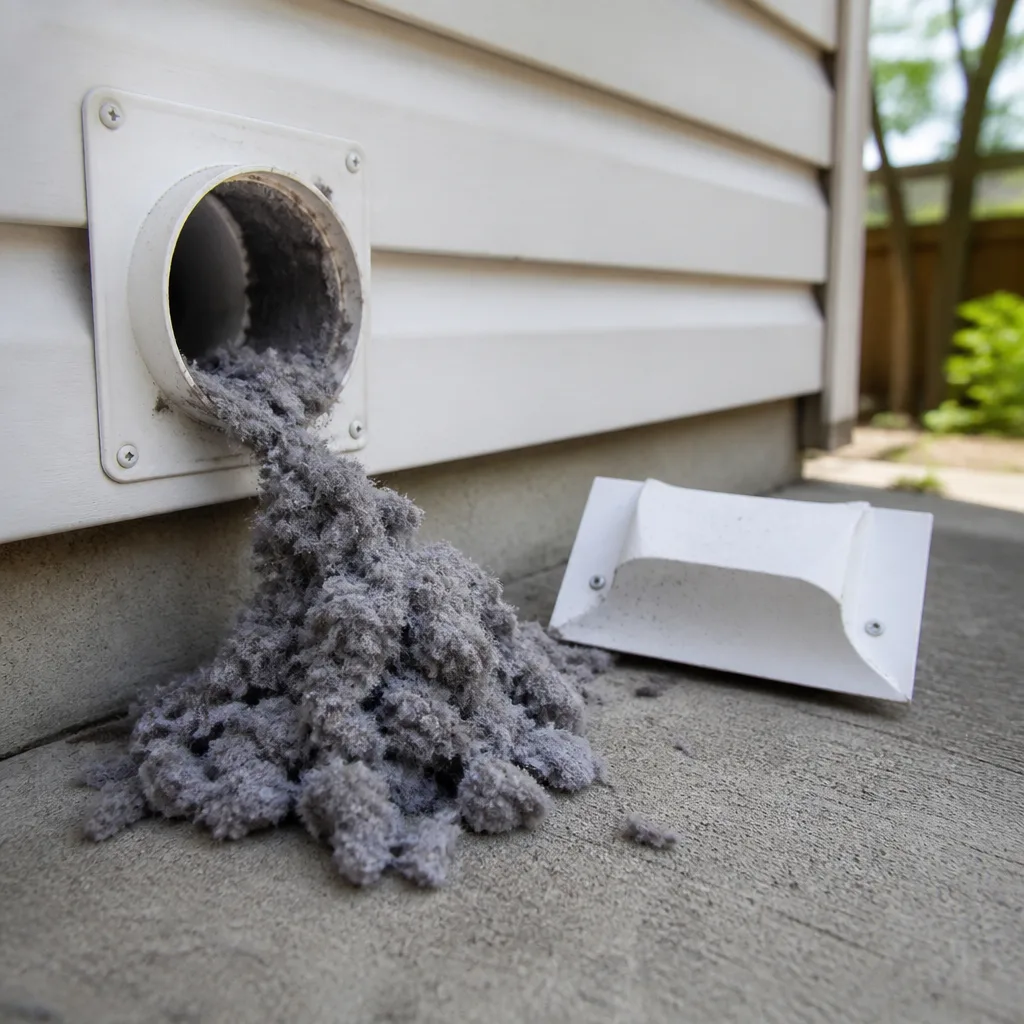 Dryer vent cleaning
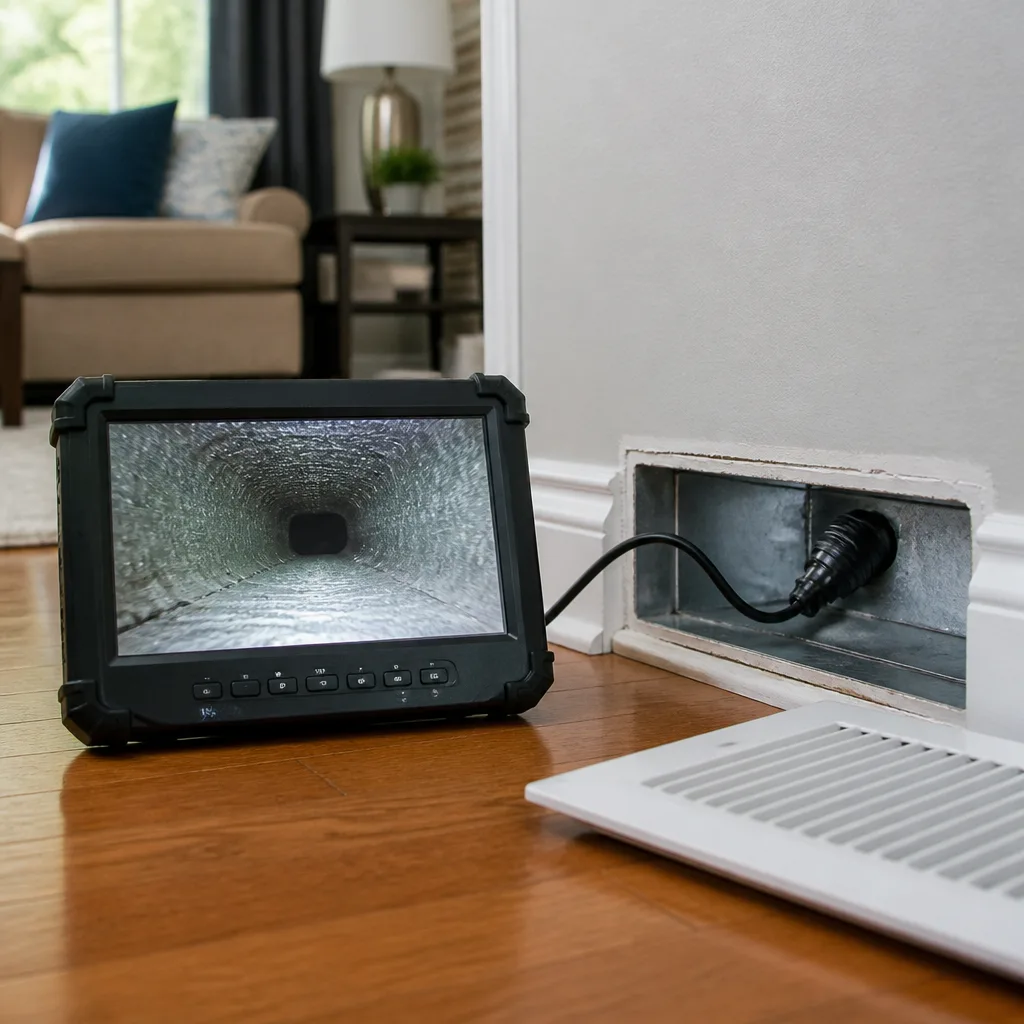 Camera inspection
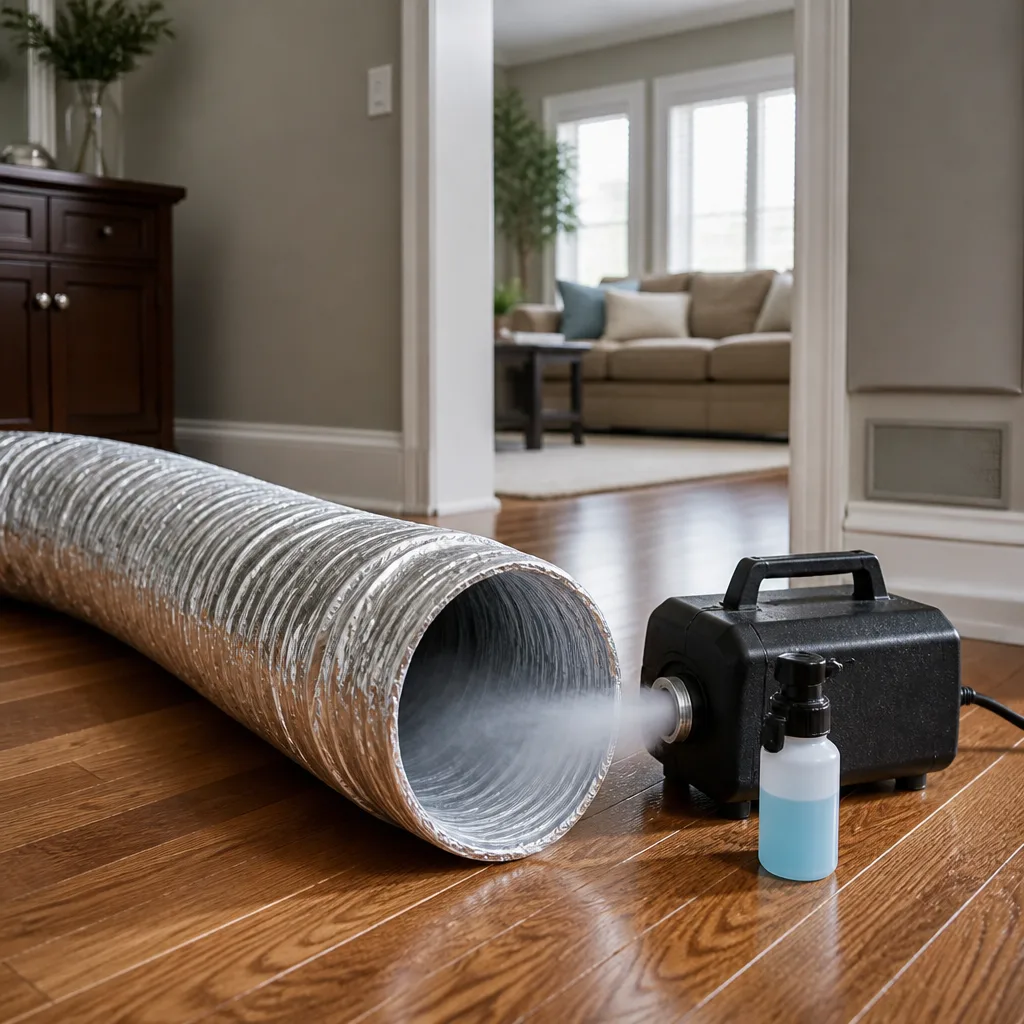 Sanitizing & deodorizing
Whole-system duct and dryer vent check with before-and-after photos - you see exactly what came out of your vents
That "$99 whole-house special" is a bait ad - the real number appears once they are in your hallway, or the "clean" is a shop-vac at the register. We photograph the inside of your ducts before and after instead.
DIY vs Professional Air Duct Cleaning: The Centennial Homeowner’s Decision Guide
Most homeowners who try to clean their own ducts don’t make them cleaner. They make them temporarily dirtier, then wonder why the house smells like dust for a week. The reason is measurable: a shop vac pulled up to a register generates somewhere in the range of 50 to 80 cubic feet per minute of suction, while a professional negative-pressure system moves 10,000 to 16,000 CFM. That gap isn’t a marketing line. It’s the difference between lifting debris into the airstream and actually pulling it out of the house. This guide breaks down what DIY can honestly accomplish in a Centennial home, where it backfires, and how to tell which side of that line your own duct system sits on.
Quick Answer
DIY air duct cleaning can handle surface-level register dust and filter swaps, but it cannot perform source removal. Real duct cleaning requires negative pressure strong enough to hold debris in suspension while a rotary brush loosens it from every interior surface, and consumer equipment can’t generate that pressure. For most Centennial homes with visible dust buildup, pet hair, recent renovation, or a dryer running long, professional cleaning is the only method that actually extracts contamination rather than redistributing it.
Styles & brands we work with
- Whole-home duct cleaning
- Dryer vent cleaning
- Camera inspection
- Sanitizing & deodorizing
Table of Contents
- The Physics Behind Negative-Pressure Source Removal
- What Homeowners Can Legitimately Do Themselves
- Where DIY Backfires and Makes Contamination Worse
- The Real Cost Comparison: DIY vs Professional
- When Professional Duct Cleaning Has Measurable ROI
- When Cleaning Isn’t the Right First Step
- The Dryer Vent Exception
- How to Vet a Duct Cleaning Company
The Physics Behind Negative-Pressure Source Removal
Duct cleaning isn’t a scrubbing job. It’s an extraction job, and extraction depends entirely on airflow volume. The equipment a professional crew brings is built around one job: put the whole duct system under negative pressure so that when a rotary brush agitates debris from the interior walls, that debris has somewhere to go besides your living room.
Here’s what that looks like in practice on an air duct cleaning job. A HEPA vacuum rig, like the Nikro systems we run, connects to the main trunk or a dedicated access port. Once the system is under continuous negative pressure, a Rotobrush rotary brush system feeds through each branch line, scouring the interior and pulling loosened material back toward the vacuum. The brush never outruns the vacuum. If it did, dust would simply puff out of the nearest register.
The numbers explain why consumer tools can’t play in this space:
- Shop vac at a register: roughly 50 to 80 CFM of localized suction, dropping sharply with hose length and filter loading.
- Consumer duct cleaning kits: similar airflow ceiling, and they agitate without containing the loosened debris.
- Professional negative-pressure rig: 10,000 to 16,000 CFM, sustained across the entire duct run.
That’s not a small upgrade. It’s a different category of tool. Centennial homes with long trunk runs and multiple finished levels are especially dependent on high-volume extraction, because a weak vacuum loses effectiveness the further it sits from the debris. If the suction drops below the point where it can hold dust, that dust stays in the duct, resettled in a slightly different pattern. What appears cleaner at the register isn’t cleaner inside the system.
What Homeowners Can Legitimately Do Themselves
A meaningful share of duct care really is DIY work, and we’d rather tell you that than oversell a service you don’t need. The line is simple: anything you can physically reach with a hand, a rag, or a screwdriver is fair game. Anything that requires containment and negative pressure isn’t.
These tasks genuinely help and cost almost nothing:
- Register and grille cleaning. Remove the supply and return covers, wash them in a sink with mild soap, dry them fully, and reinstall. This kills the visible dust plume at every register without disturbing the duct interior.
- Filter maintenance. Check the filter monthly during heating and cooling season and replace it on the manufacturer’s schedule. A clogged filter raises static pressure and forces the system to work harder. That’s a real, measurable cost.
- Visual inspection with a flashlight and phone camera. Pop a register off, slip your phone inside with the flash on video, and record ten seconds. You’ll see dust accumulation, loose flex duct, or debris the naked eye misses. This footage is genuinely useful when discussing the system with a technician.
- Dryer vent disconnection and exterior check. Unhook the flexible connector behind the dryer, vacuum out the short run you can reach, and check the exterior hood flap opens fully when the dryer runs. If it doesn’t flap freely, the line is restricted.
- Keeping the return path clear. Furniture, rugs, and storage blocking return grilles reduce airflow to the whole system. Move them. This is free and it matters.
What all five have in common is that none of them requires you to send anything into the duct beyond arm’s reach. That’s the honest boundary of homeowner duct work. Anything past that boundary needs equipment you don’t own.
Where DIY Backfires and Makes Contamination Worse
The frustrating part about poor DIY duct cleaning is that it often looks successful. The register is clean, the house seems fine, and then a week later there’s a fresh dust film on the TV stand. That’s not a coincidence. It’s redistribution.
Here’s where DIY attempts typically fail, and why:
- Agitating without extraction. A brush on a flexible rod, or a shop vac nozzle jammed into a branch line, loosens debris that then settles back into the duct in a thinner, more airborne layer. Contamination hasn’t been removed. It’s been respread.
- Dislodging biological growth without containment. If there’s visible growth inside a duct (dark staining, musty odor that worsens when the system runs), agitating it with no HEPA containment sends spores into the living space. This is one situation where a botched DIY attempt can measurably worsen indoor air quality in the short term.
- Puncturing flex duct. Improvised tools, sharp vacuum nozzles, or over-aggressive brushing can tear the inner liner of flex duct. A pinhole leak in a duct inside a finished ceiling or wall cavity is expensive to find and repair. The duct was cheap. The drywall access isn’t.
- Disconnecting a duct joint. Pulling a vacuum hose sideways off a register can separate the branch from the trunk. Sometimes that’s an accessible joint. Sometimes it’s behind finished drywall. The homeowner seldom knows which until air stops coming out of one room.
- Spreading debris across zones. In a multi-zone system, agitating one zone without isolating it can push material into shared trunk runs. Now a small problem has become a whole-system problem.
Every one of those failure modes comes back to the same cause: no sustained negative pressure. Containment is what separates cleaning from shuffling.
The Real Cost Comparison: DIY vs Professional
DIY duct cleaning saves money only if it works. When it doesn’t, you pay for the attempt, then pay again for professional remediation, and in the worst cases you pay for drywall repair on top. That’s the honest cost equation.
Here’s the framework we walk Centennial homeowners through:
- DIY cost floor: a shop vac (if you don’t already own one), a duct brush kit, filter replacements, and an afternoon. Real, but small.
- DIY cost ceiling: the same plus a professional cleaning once you realize the attempt didn’t work, plus possible duct repair if a joint or flex liner was damaged in the process.
- Professional cost: a single job quoted per system, with the scope defined before work starts and the outcome documented.
Professional duct cleaning pricing is quoted per system, not per vent, and a written estimate sets the final number before anyone touches your ducts. That structure matters, because per-vent pricing is where the coupon-service bait-and-switch lives: a low headline number that grows as the tech counts registers. Whole-system quotes don’t have that trap.
The decision point is straightforward. If your ducts are visually clean, you’ve never had water intrusion or renovation dust, and your filter schedule is intact, DIY register cleaning and filter care is all you need. If you can see accumulation inside the ducts, if the system smells, or if a contractor has been through the house, DIY has likely already peaked in usefulness and professional extraction is the next honest step.
When Professional Duct Cleaning Has Measurable ROI
Professional cleaning earns its cost in specific, verifiable situations. It doesn’t earn its cost as a routine annual ritual. Being honest about that distinction is more useful to you than a sales pitch.
Cleaning is worth the money in these cases:
- Post-renovation. Drywall dust, sawdust, and construction grit settle deep in duct runs and recirculate for months. This is the single most common case where cleaning produces a visible, immediate difference.
- Post-water-damage. Any moisture intrusion that reached the ducts creates conditions for biological growth. This needs containment-grade extraction, not agitation.
- Confirmed or strongly suspected mold. Musty odors that intensify when the system runs, plus visible dark staining inside a duct, warrant professional assessment. We can assess and clean; mold remediation as a service is outside what we do, and we’ll tell you if a case calls for it.
- Verifiable airflow loss. Rooms that have gradually gone weak, hot spots in summer, or a system that seems to be working harder than it used to. If the cause traces to a blocked or crushed duct, cleaning and repair can restore the airflow.
- Heavy pet dander or occupant sensitivity. Homes with multiple pets, or with occupants who react to airborne particulate, see the biggest benefit from source removal. This is also where air quality equipment matters. We run Abatement Technologies air-scrubbing capability for IAQ-sensitive environments and work with Aprilaire and Honeywell components, because cleaning only solves the duct-side of the problem.
- After pest activity. Rodent or insect activity inside ductwork leaves debris that can’t be safely handled with DIY equipment. Professional cleaning with HEPA containment is the appropriate response.
Outside those six cases, cleaning is often a solution in search of a problem. If the ducts are clean and the filter is maintained, the money is better spent on the ducts’ performance (airflow balance, duct sealing, dryer vent maintenance) than on cleaning them again.
When Cleaning Isn’t the Right First Step
Some homeowners call for duct cleaning when the answer is a different service entirely. Skipping cleaning and going straight to the actual fix is more efficient and more honest.
- A crushed or disconnected duct. Cleaning a system with a broken branch line makes no sense. Repair it first. This is why we keep air duct repair inside the same service scope as cleaning: the technician diagnosing the duct system can also fix it, rather than handing you off to another trade.
- A duct sizing or design problem. Rooms that were always cold and always will be are usually a design issue, not a cleanliness issue. Duct repair and airflow correction are the answer. Cleaning isn’t.
- A failing filter strategy. If the filter is being changed quarterly on a MERV rating too high for the blower, the system is starving for air. Fix the filter first, then assess the ducts.
- An HVAC equipment issue. A system that runs constantly, trips breakers, or can’t hold temperature is usually an HVAC issue, not a duct issue. Cleaning won’t fix it. We don’t do HVAC installation or general maintenance, and we’ll say so.
The point of narrowing our scope to cleaning, dryer vent, and repair is that we can be useful in a diagnostic sense. If cleaning isn’t the right answer, we say so and point you in the right direction. Being a specialist means knowing where your specialty ends.
The Dryer Vent Exception
Dryer vents are the one duct category where DIY cleaning is genuinely dangerous in a way duct cleaning is not. A restricted dryer vent is a fire hazard, not just an efficiency problem, and the standard advice is not to improvise. Lint that’s packed tight near the exterior termination or behind the dryer needs professional extraction with equipment that can pull the whole column of lint out, not just loosen the top layer.
If you check the exterior hood flap and it barely opens when the dryer runs, or the dryer is taking two cycles to dry a normal load, or the dryer itself is hot to the touch around the top, that’s a vent restriction. Unhook the flexible connector behind the dryer and clean what you can reach, then hand the rest to a professional. Our dryer vent cleaning uses the same extraction equipment as our duct work, which is the piece consumer tools can’t replicate.
How to Vet a Duct Cleaning Company
The right question isn’t “who’s cheapest.” It’s “can they prove what they did.” Duct cleaning has a well-earned reputation problem, and the way to sidestep the bait-and-switch is to ask specific questions before anyone shows up.
Ask these before you book:
- What equipment do you run? “Shop vac” is a deal-breaker. Look for named professional systems. We run Rotobrush rotary brush and Nikro HEPA vacuum equipment on every job, because those are the standards the trade uses.
- Is the price whole-system or per vent? Whole-system, quoted in writing before work starts. Per-vent pricing is the warning sign.
- Do you provide before-and-after photos? Every legitimate company should. Ask to see images of your own ducts, not stock photos.
- Is the company insured and bonded? This matters in Centennial homes with finished basements and tight mechanical chases.
- What’s the service scope? If they’ll also do HVAC install, plumbing, and gutter cleaning, their duct work is probably an upsell. A focused specialist has cleaner answers.
- Do they handle both cleaning and repair? Ducts discovered to be broken mid-cleaning need a same-crew repair call, not a contractor referral.
We keep Guardsman protective products on hand for post-cleaning treatment on systems that call for it. Not every job needs it. But it’s part of the honest finish to a cleaning, not a mandatory add-on sold at the end.
Common Mistakes to Avoid
- Judging a job by how the register looks. Surface appearance tells you almost nothing about the condition of the duct interior. This is why before-and-after photos of the ducts themselves, not the register, are the diagnostic.
- Trusting a low headline price. In the Centennial market, coupon-service duct cleaning frequently ends with an invoice several times the advertised number once the technician is inside the door. Whole-system written quotes are the antidote.
- Renting a consumer duct cleaning kit and going at it. Rented kits generate the same weak airflow a shop vac does. They agitate without extracting. Short-term you may see a puff of dust from every register and assume the job is done. It isn’t.
- Pulling the hose off a register to “clean the branch.” This is how a branch disconnects from the trunk inside a wall cavity. The duct cleaning didn’t damage the duct; the pulling did.
- Skipping filter changes as a substitute for real cleaning. Filters protect the blower. They don’t clean the duct. High-MERV filters on a system rated for lower airflow can also starve the blower and make the problem worse.
- Assuming a dusty house is a duct problem. Sometimes it’s a leaky envelope (dry Colorado wind pushing dust through every gap in the shell) or a marginally sized filter. Dust on the furniture isn’t automatically duct dust.
- Ignoring the dryer vent because the dryer “still works.” Dryers run for years on restricted vents before failure, and each cycle pushes more lint into the column. The system working doesn’t mean it’s safe.
See the difference
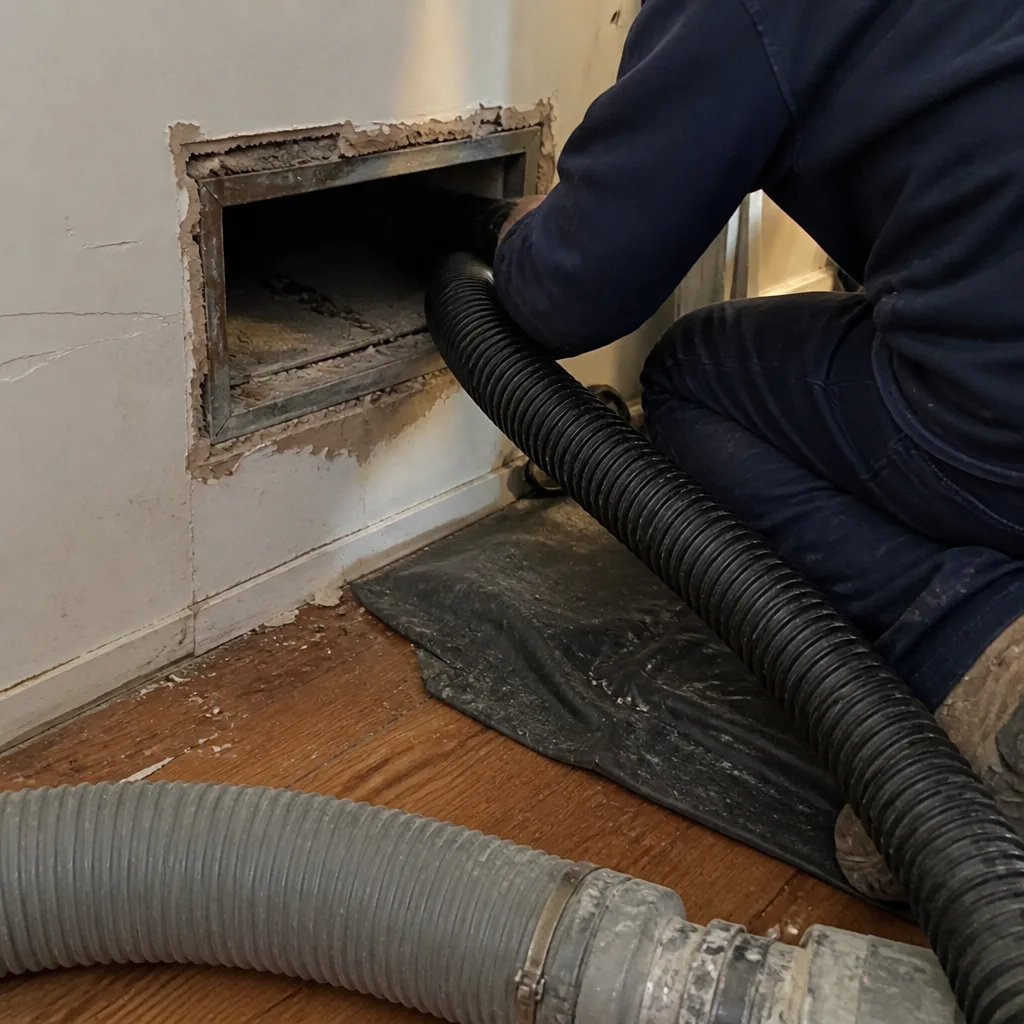 Before
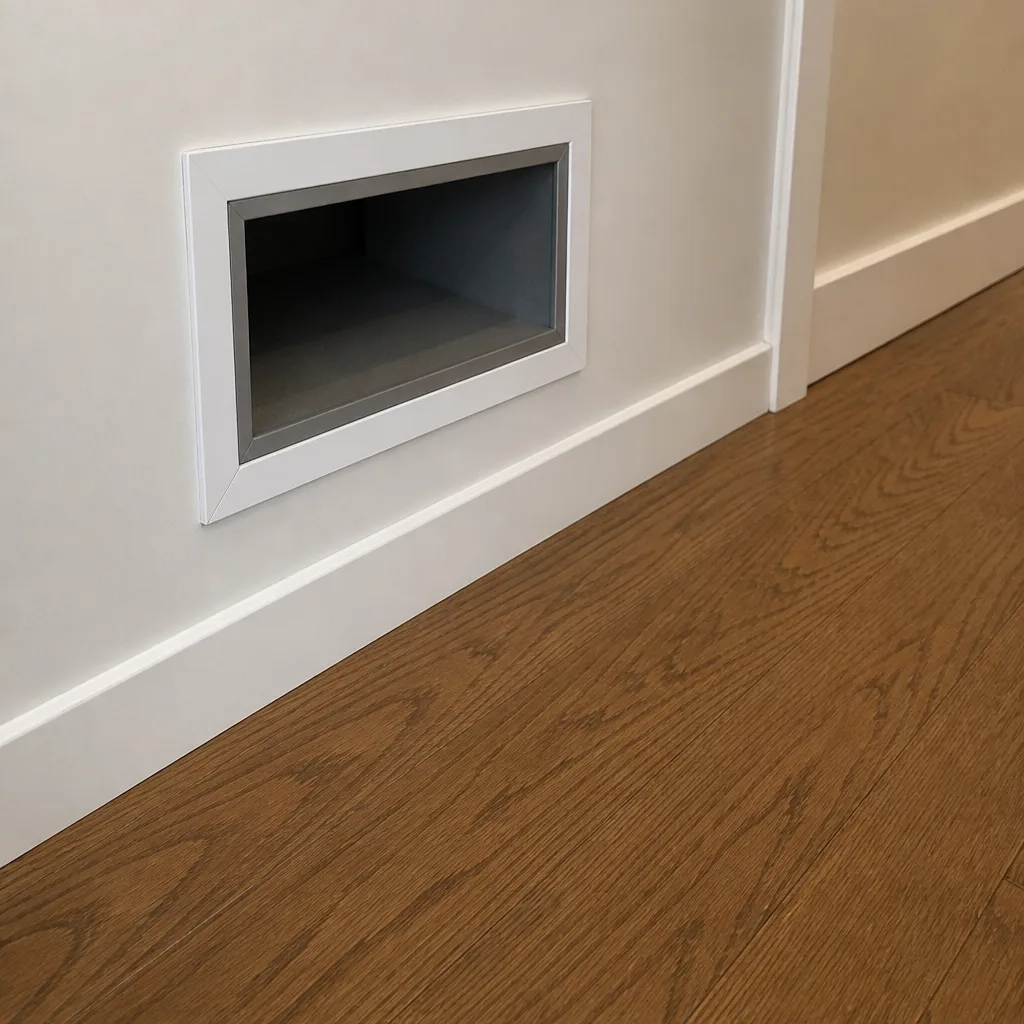 After
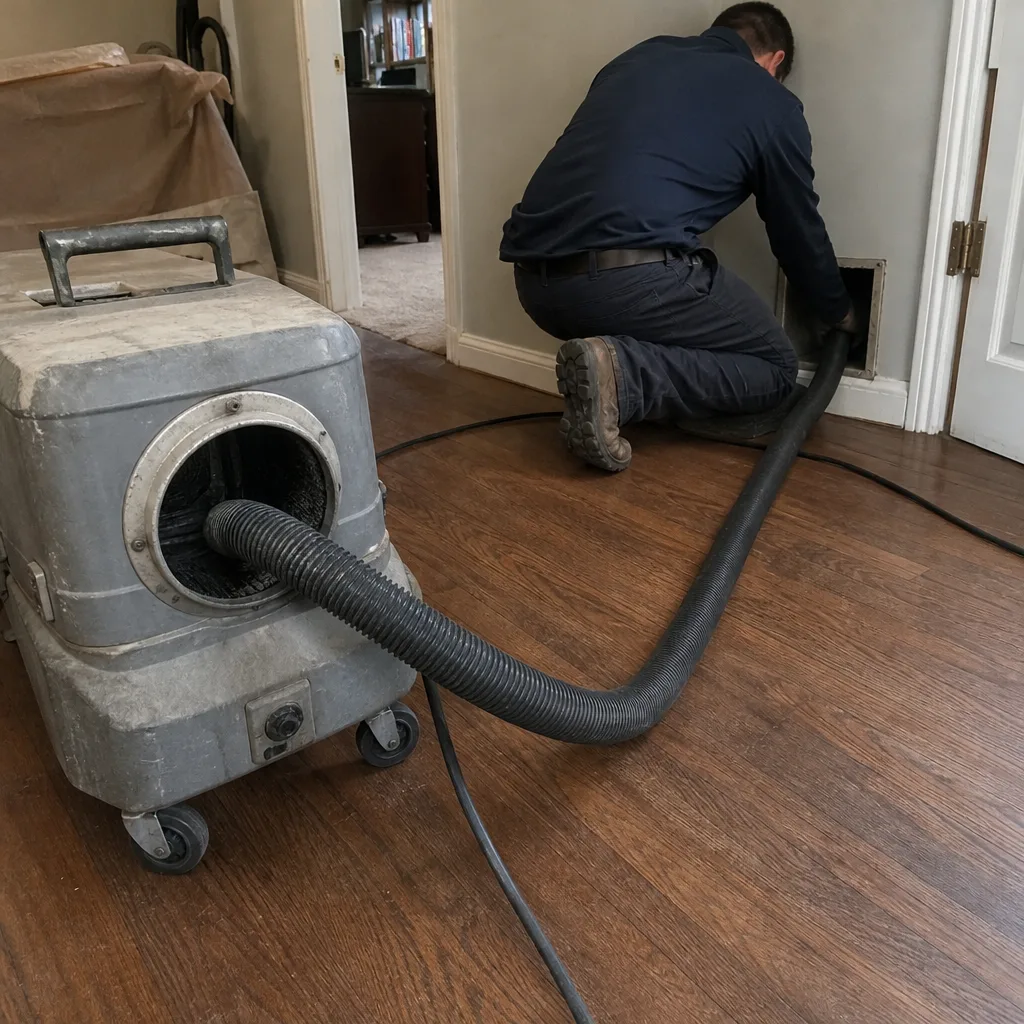 Before
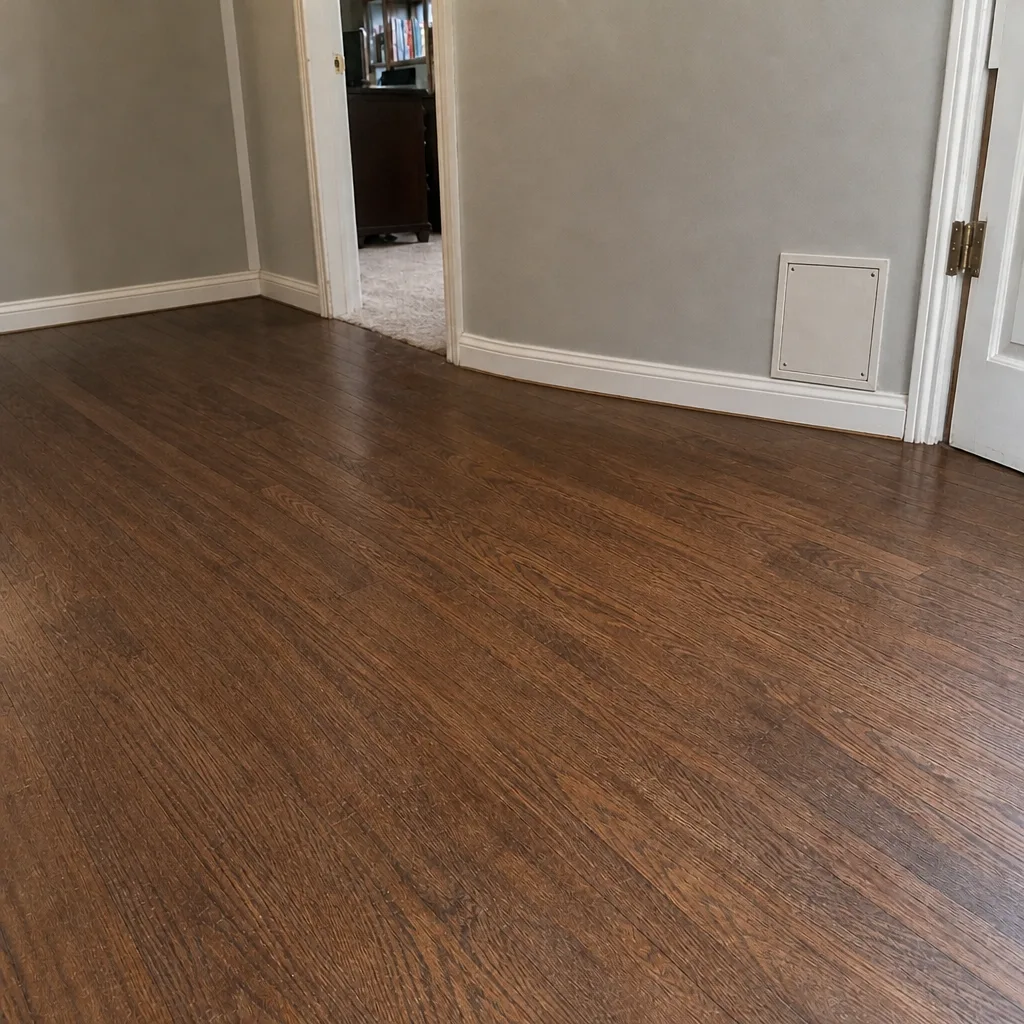 After
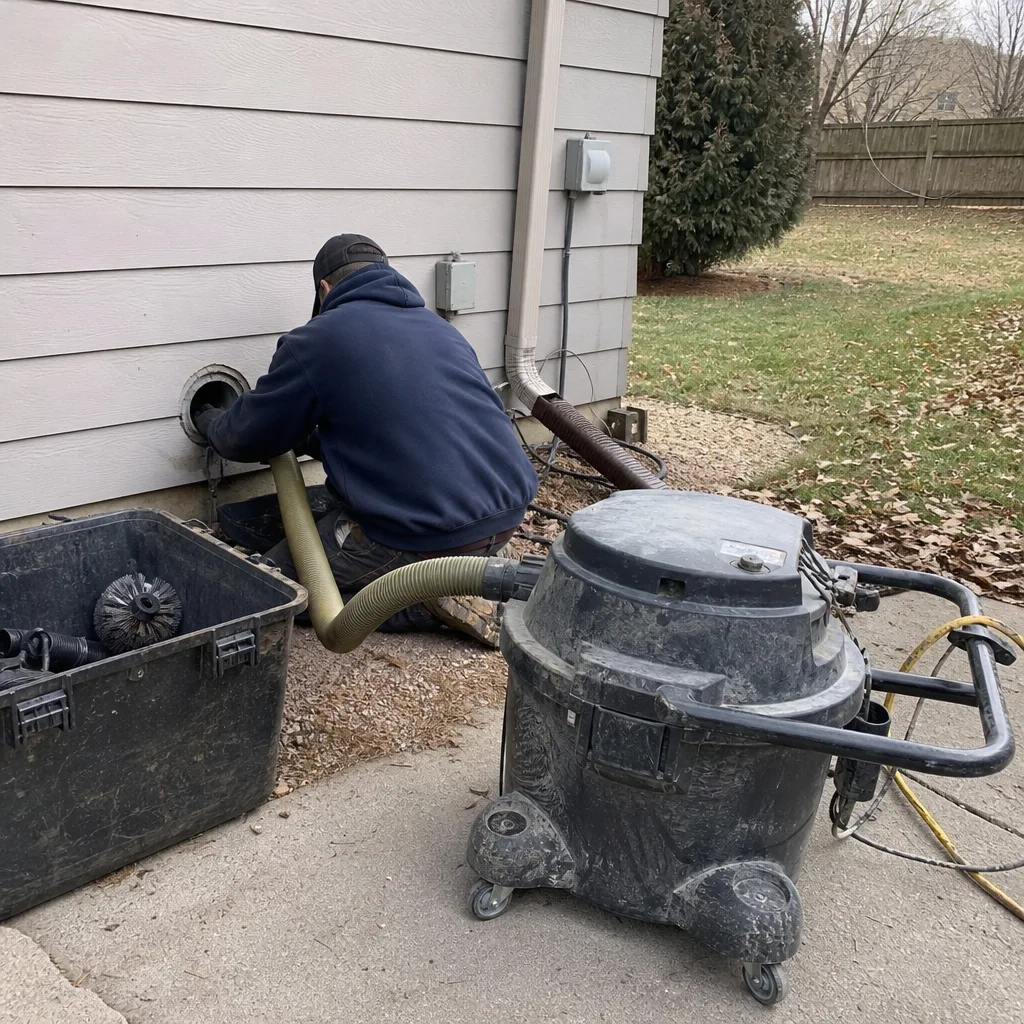 Before
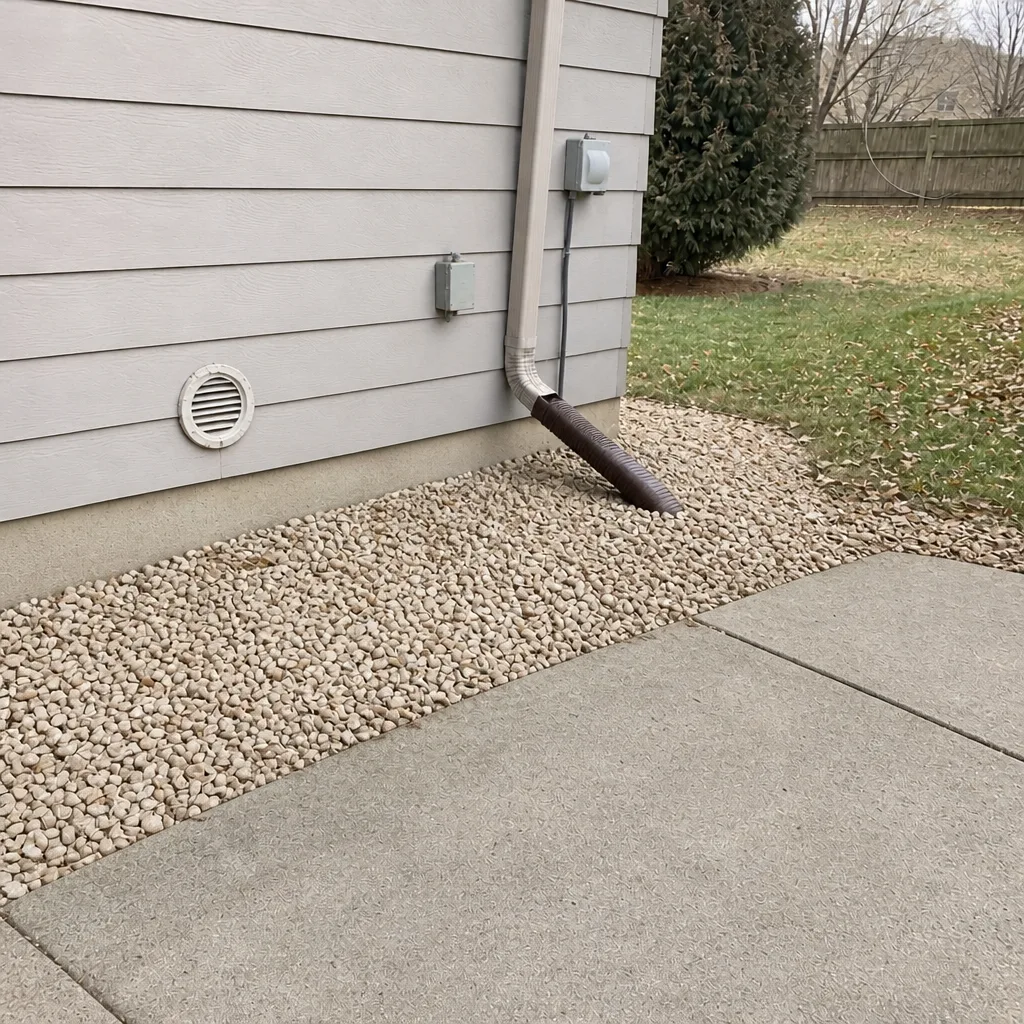 After
When to Call a Professional
Call a professional when the contamination is inside the ducts (not just on the register), when a filter schedule hasn’t protected the system, when renovation or water damage sent material into the duct runs, when the dryer is taking too long, or when you’ve already tried a DIY attempt and the results don’t hold. Those are the cases where equipment matters and consumer tools can’t reach the problem.
Duct Cleaning Centennial offers free estimates in Centennial for anyone unsure which side of that line their home sits on. We serve the Centennial area with a scope deliberately narrow: air duct cleaning, dryer vent cleaning, and air duct repair. Our technicians have up to 10 years of experience with the equipment and the duct configurations that show up in Centennial homes.
Call (888) 597-0329 for a free estimate. We answer 24/7. Fast dispatch from 7am to 7pm, Sunday through Friday.
Frequently Asked Questions
A shop vac cannot clean air ducts in any meaningful sense. It generates roughly 50 to 80 CFM of suction at a register opening and drops sharply with hose length, while a professional negative-pressure system operates at 10,000 to 16,000 CFM. The gap is what makes source removal possible and why limited consumer equipment tends to redistribute debris rather than extract it. For an honest assessment of your ducts, call (888) 597-0329 for a free estimate.
Most Centennial homes don’t need duct cleaning on a fixed schedule. Clean the ducts when there’s a specific trigger: recent renovation, water intrusion, confirmed mold or musty odor, verifiable airflow loss, or heavy pet accumulation. Homes without those triggers often go years without needing the service, which is why we ask about triggers before quoting. Call (888) 597-0329 for an honest read on your situation.
Cheap quotes usually either skip the equipment (no real negative-pressure rig) or price per vent and grow the invoice on site. A legitimate whole-system quote is set in writing before work starts, prices the system as a system, and can still produce before-and-after photos of your own ducts. If a quote can’t do all three, the low number is not a bargain. Call (888) 597-0329 for a whole-system estimate.
Before-and-after photos of your own ducts are the only proof that matters. Ask to see images of the interior of a supply branch and a return run, taken during the job, with the registers clearly identifiable. Companies unwilling to provide those photos have a reason. Our free estimate includes a look at your current duct condition – call (888) 597-0329.
Partial DIY dryer vent cleaning is safe if you stick to the short flexible connector behind the dryer and check the exterior hood flap. Cleaning deeper into the vent with consumer tools is where it becomes risky: the packed lint column near the termination doesn’t come out without professional extraction, and a partially cleaned vent can still be a fire hazard. If your dryer is running longer than usual, call (888) 597-0329 for a professional vent assessment.
Duct cleaning removes accumulated contamination from inside an intact duct system. Duct repair fixes physical problems: crushed flex duct, disconnected joints, torn liners, or blocked branches that prevent air from reaching a room. Many Centennial homes that think they need cleaning actually need repair, and sometimes both. Call (888) 597-0329 for a free estimate that diagnoses which you need.
The Bottom Line
DIY air duct cleaning is useful for registers and filters, and it can’t substitute for source removal. The 50 to 80 CFM / 10,000 to 16,000 CFM gap is the whole story: without high-volume negative pressure, agitating the interior of a duct doesn’t clean it, it just moves the contamination into the airstream. Do the reachable work yourself. Reserve professional cleaning for the cases with real triggers: post-renovation dust, water damage, suspected growth, verifiable airflow loss, or a dryer vent that’s clearly restricted. If you’re unsure which category your Centennial home falls into, a free estimate settles it. Duct Cleaning Centennial works with professional Rotobrush and Nikro equipment, keeps the service scope narrow, and quotes whole systems in writing before work starts. Call (888) 597-0329. We answer 24/7. Fast dispatch from 7am to 7pm, Sunday through Friday.
Written by the team at Duct Cleaning Centennial.