
Last updated November 16, 2026
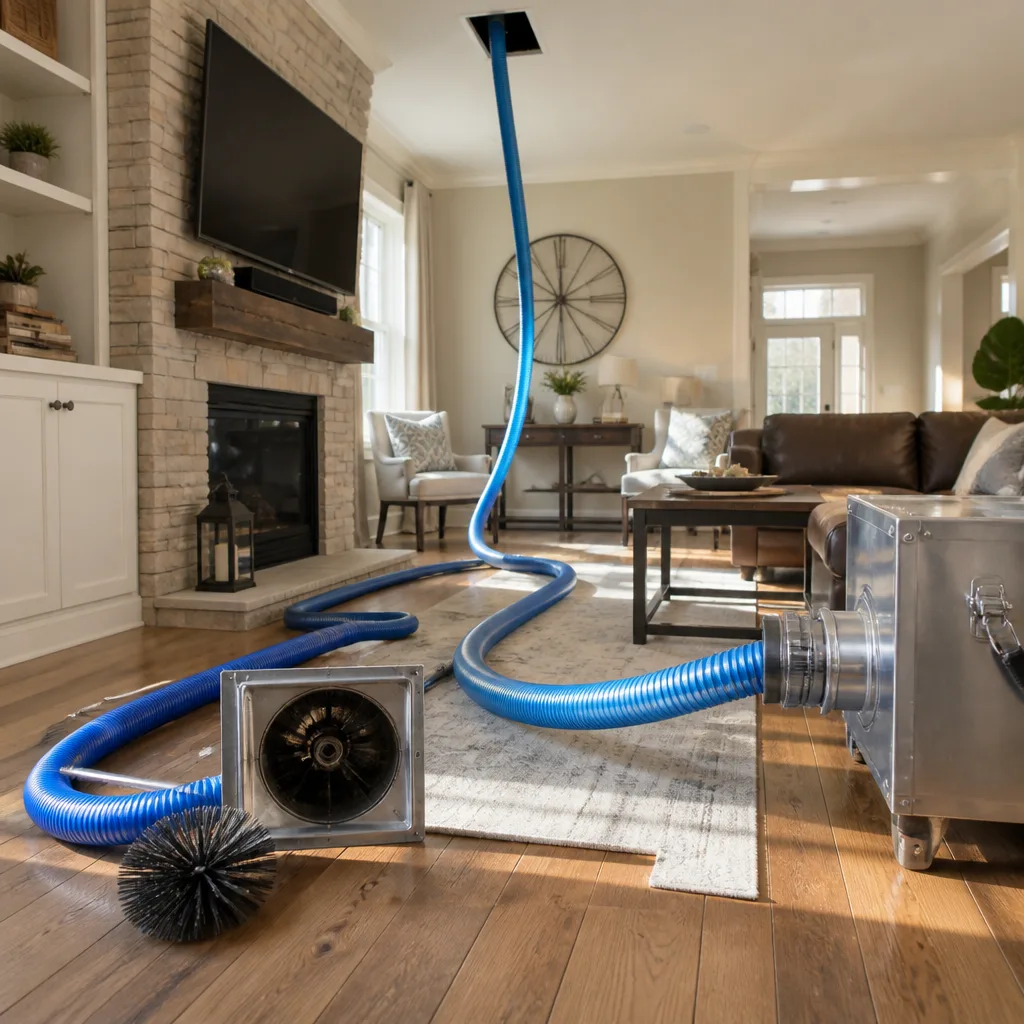 Whole-home duct cleaning
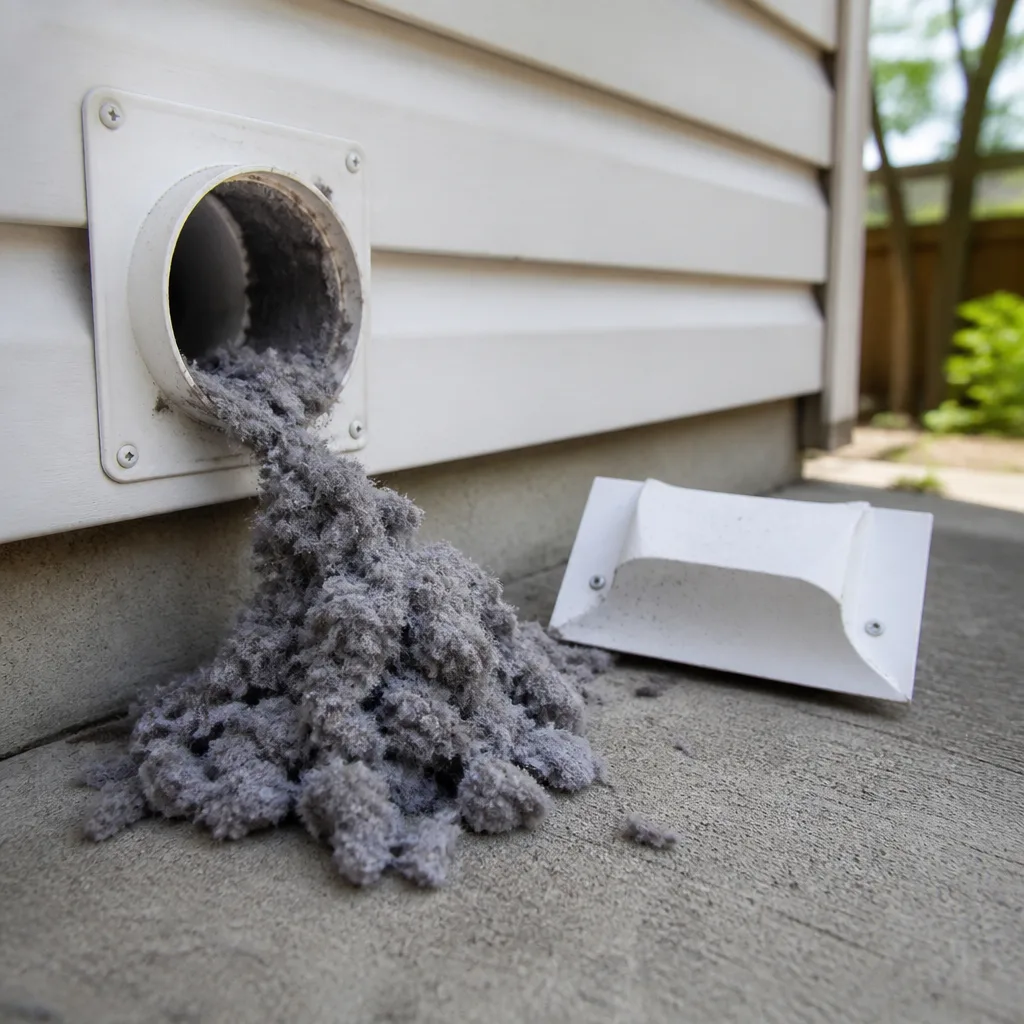 Dryer vent cleaning
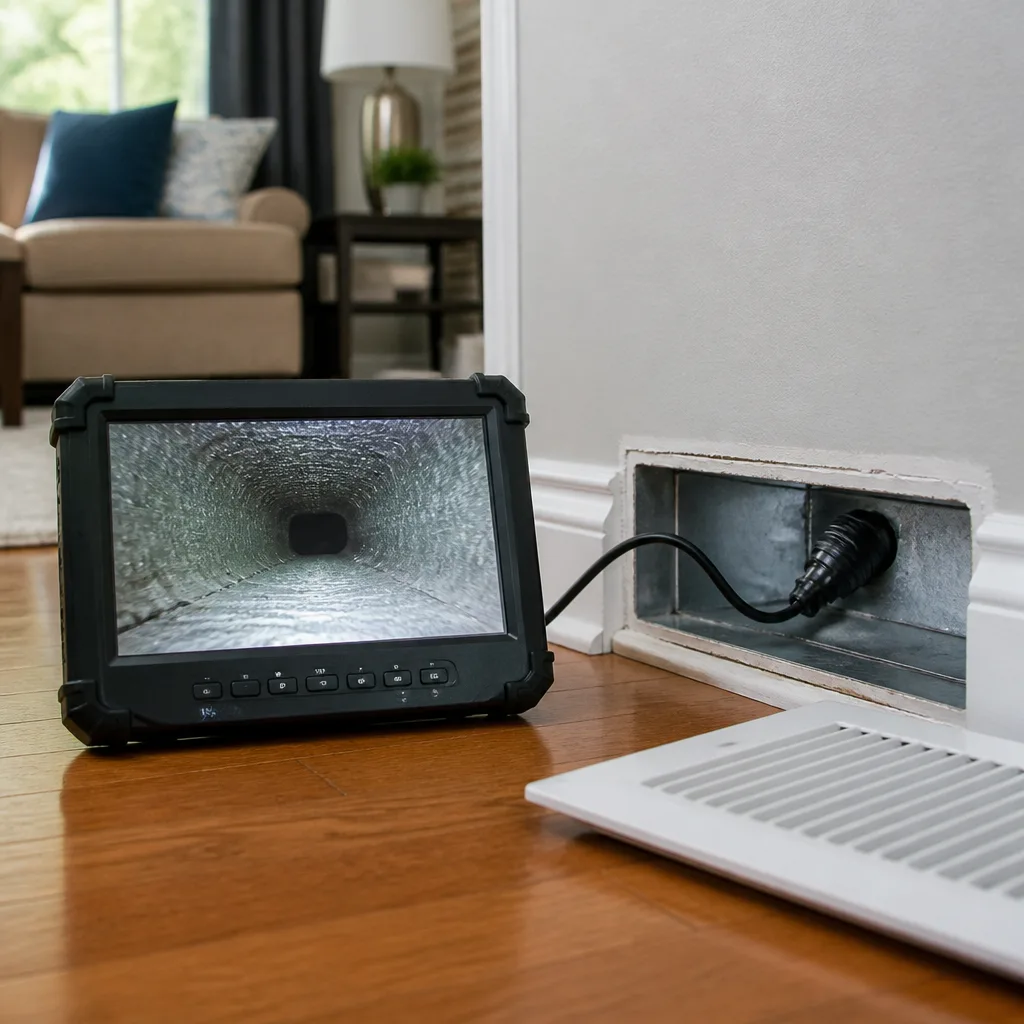 Camera inspection
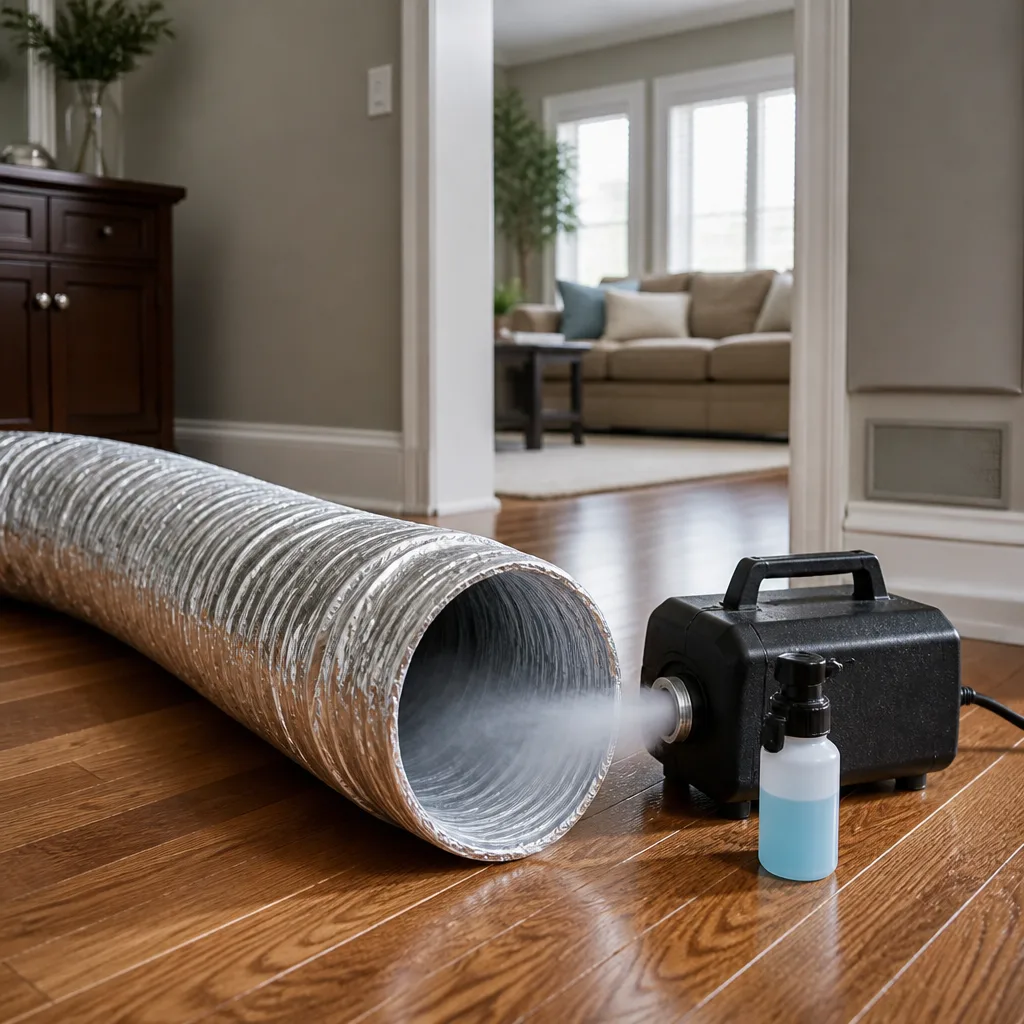 Sanitizing & deodorizing
Whole-system duct and dryer vent check with before-and-after photos - you see exactly what came out of your vents
That "$99 whole-house special" is a bait ad - the real number appears once they are in your hallway, or the "clean" is a shop-vac at the register. We photograph the inside of your ducts before and after instead.
Air Duct Cleaning Warning Signs: A Centennial Homeowner’s Reference Guide
Dust on your register covers is almost never a meaningful sign of duct contamination. That film is surface debris that settles from room air, and it tells you far more about how often you dust than about what’s living inside your trunk line. The warning signs that actually matter are quieter, and most of them live deeper in the system: at the main trunk, along exterior wall runs, at the air handler cabinet. This guide walks through the observable evidence we look for on a duct assessment in Centennial, how to tell serious problems from harmless ones, and when a filter change stops being the answer.
Quick Answer
The warning signs that justify professional air duct cleaning in Centennial are persistent debris at supply registers after cleaning, visible dust streaking near the air handler, a musty odor that doesn’t fade at startup, uneven airflow between zones with no HVAC-side cause, and construction dust pulled into return runs after a remodel. Surface dust on register covers alone is not one of them.
Styles & brands we work with
- Whole-home duct cleaning
- Dryer vent cleaning
- Camera inspection
- Sanitizing & deodorizing
Table of Contents
- Three Physical Signs of Contamination in the Main Trunk Line
- Normal Duct Sweating vs. Real Moisture Intrusion
- Odor Diagnostics: Musty at Startup, Musty Always, or Burning
- Airflow Asymmetry: What the Ducts Are Telling You Before You Call an HVAC Tech
- Post-Renovation Warning Signs in Centennial’s Remodel Market
- Register Dust vs. Duct Debris: How to Tell the Difference
- A Step-by-Step Home Walkthrough You Can Do Yourself
- What Professional Duct Cleaning Actually Involves
Three Physical Signs of Contamination in the Main Trunk Line
The main trunk line is the large rectangular or round duct that leaves your air handler and carries conditioned air through the house before branching off. Contamination at the trunk is a different problem from contamination at branch runs, and the two require different responses. Branch run contamination is often localized and can sometimes be addressed with a targeted clean. Trunk line contamination usually means the whole system needs attention, because everything downstream of the trunk is being fed from it.
Here are the three signs we watch for that point to trunk-level contamination rather than a single dirty branch:
- Debris visible at the air handler cabinet. If you open the panel where the supply plenum meets the cabinet and find a coating of dust, lint, or dark particulate, the trunk line is almost certainly loaded. That material didn’t drift up from a bedroom register.
- Consistent debris at every supply register, not just one or two. When three or more supply registers in different rooms show the same dusty discharge, the common upstream source is the trunk.
- Dust streaking at the seams of ductwork in unconditioned spaces. Look at the visible duct runs in the attic or crawl space. Dark streaks along seams and joints where the foil tape or mastic has failed indicate the duct is both leaking and contaminated from the outside in.
Branch-only contamination looks different. You’ll see debris at one register in a single room, usually the branch furthest from the handler or one that hasn’t been used in a while. That’s a localized clean, not a whole-system job. Knowing which scenario you’re in before the technician arrives keeps the conversation honest and the work sized correctly.
For a fuller picture of how professional cleaning handles each of these situations, the air duct cleaning page covers the equipment and process in detail.
Normal Duct Sweating vs. Real Moisture Intrusion
Ducts sweat. Any time cool air moves through a duct that runs through a warm, humid space, condensation forms on the outside of the metal. In Centennial, our temperature swings can be dramatic through a single day, so the amount of sweating you see on outside-wall duct runs can be substantial even on a healthy system. That’s normal. It becomes a problem when the sweating is chronic, when it’s accompanied by water staining, or when it’s happening inside the duct rather than on the outside.
The chart below is the one we use when talking to homeowners about what to look for:
- Normal sweating: Beads of moisture on the exterior of supply ducts in the attic during summer. Dries by evening. No staining, no odor, no corrosion.
- Borderline sweating: Persistent moisture with light water staining on nearby wood framing, or a cold duct that stays wet for days after the weather changes. This points to inadequate insulation or a vapor barrier issue.
- Moisture intrusion: Standing water, water stains running horizontally along an exterior wall duct run, green or white corrosion on copper fittings nearby, or visible dark growth at seams. This creates mold risk inside the duct and cannot be ignored.
The exterior wall runs are where Centennial’s temperature swings cause the most trouble. Cool supply air moving through a duct routed along an exterior wall facing the afternoon sun can sweat heavily, and if the duct wrap is compromised, that moisture wicks into the surrounding building cavity. That’s not a duct cleaning problem by itself. It’s a moisture problem that has to be solved before cleaning, or you’ll be cleaning a duct that gets wet again the next hot afternoon.
When we see signs of moisture intrusion on an assessment, we flag it and recommend a fix to the vapor barrier or duct insulation before or alongside the clean. Proceeding with a cleaning on a chronically wet duct wastes the money.
Odor Diagnostics: Musty at Startup, Musty Always, or Burning
What you smell, and when you smell it, tells us where the problem is. Three patterns cover nearly every odor complaint we hear:
Musty smell that fades a few minutes after startup
This is common and usually benign. Dust and organic material in the system absorb moisture during the off cycle, then release a light musty odor when air starts moving again. Once the air has flowed for ten or fifteen minutes, the smell goes away. A clean and possibly a deodorizing treatment addresses it. This is the most common pattern in Centennial homes during the shoulder seasons when the system cycles on and off more frequently.
Musty smell that persists at every run time
When the musty odor is there every time the system runs, and it doesn’t clear, that’s a different conversation. It can indicate microbial growth inside the duct, often in the trunk or at the cooling coil, where condensation has been sitting. This is the category that warrants a professional assessment before anything is disturbed. A cleaning under these conditions requires containment so that spores aren’t distributed through the home during the process. HEPA-grade vacuum equipment and air scrubbers are the tools that make this safe.
Burning or hot smell
If you smell burning, hot, or electrical odor when the system runs, stop and call for service. That smell suggests debris, dust buildup, or failing components near the heat exchanger or electrical controls. It is a safety issue, not a cleaning issue, and it should be treated as urgent. Do not continue to run the system while you investigate.
If the smell is musty but not burning, a call for a professional assessment is the right next step. Odor is one of those signs where reading the pattern matters more than the intensity.
Airflow Asymmetry: What the Ducts Are Telling You Before You Call an HVAC Tech
When one room gets blasted with air and another barely gets any, the instinct is to call an HVAC technician about the unit. Before you do, it’s worth ruling out duct-side causes, because those are the symptoms that show up at the register level and get misdiagnosed as equipment failure. Airflow asymmetry is one of the most useful diagnostic tools a homeowner has, and it costs nothing to check.
Here’s the order we recommend for narrowing down duct-side causes:
- Confirm the zone pattern is consistent, not intermittent. A room that’s weak every time the system runs has a duct or balancing problem. A room that’s weak only on hot afternoons may be a system capacity issue.
- Check the supply register damper. Many supply registers have an adjustable damper behind the grille. A partially closed damper will throttle airflow to one room without any equipment problem at all.
- Inspect the visible branch run. A branch that has come loose at a joint, has a collapsed flex section, or is kinked at a sharp turn will underdeliver air regardless of how strong the system is.
- Look for a missing or disconnected branch. In attics, flex branches sometimes pull off their takeoffs entirely. The air is being delivered into the attic instead of the room.
- Check the return path. A bedroom with a door that seals tight and no return-air path will pressurize and feel starved, even with a correctly sized supply.
If all five of these check out and the asymmetry persists, that’s when the conversation moves to the HVAC side. Ruling out duct causes first saves you a diagnostic fee and, in our experience, resolves the majority of “one room is cold” complaints before a technician arrives. When the duct itself is the cause and the fix is duct repair, that’s a job for a duct specialist rather than an HVAC service company.
Post-Renovation Warning Signs in Centennial’s Remodel Market
Renovation dust in a duct system is one of the most overlooked problems we see. Centennial’s active remodel market means a lot of homes have had kitchen and bath renovations, basement finishes, and additions in the last few years, and almost none of those projects included proper dust containment at the returns. Drywall dust is especially problematic because it’s fine, it’s abrasive, and it settles into every horizontal run in the system.
The post-renovation signs that matter:
- Drywall dust visible in the return runs. Pop a return grille off and look inside with a flashlight. A white or gray powder coating the return duct is drywall dust that got pulled in during the project.
- Insulation fragments at supply registers. Small yellow or pink fiberglass bits at the supply registers after a remodel mean insulation debris from the work got into the attic ductwork or was disturbed during the project.
- Debris at the air handler cabinet. Drywall dust and construction debris often ends up at the cabinet, where the return air brings it. This is the single most telling post-renovation sign.
- New or worsened odor after the project. Fresh construction materials and adhesives off-gas into the return air for weeks. If the smell hasn’t faded after the project is complete, dust and debris in the system are holding onto those VOCs.
- Filter loading that’s suddenly faster. If the filter that used to last three months is now loading in six weeks, the duct system is holding construction dust and feeding it downstream.
If you had a renovation and any of these signs are present, the cleaning should happen before the next heating or cooling season, not after. The longer construction dust sits in the system, the more it migrates into the branch runs and the harder it is to remove.
Register Dust vs. Duct Debris: How to Tell the Difference
We said at the top that register dust is a poor indicator, and it’s worth explaining why. Register covers are exposed to room air and room dust. Every time someone walks across the carpet, moves a sofa, or opens and closes a door, fine particulate goes airborne and settles on the nearest horizontal surface, which includes the top of the register grille. That film is room dust, not duct dust, and it will reappear within a week of any cleaning.
What actually indicates duct debris is what you find when you look inside the register boot rather than at the grille. The boot is the short duct section connecting the register opening to the branch run. Here’s the distinction:
- Register grille dust: Surface film on top of the grille, easily wiped away. Not a duct problem.
- Boot dust: Dark or gray coating on the inside walls of the boot, visible when you remove the grille. This may be duct debris coming from the branch.
- Branch debris: Visible debris lining the branch run, seen with a flashlight looking down the boot. This is straight duct contamination.
- Trunk contamination: Debris at the air handler and consistent across multiple branches. Whole-system clean.
This diagnostic distinction is the single biggest reason we advise homeowners not to spend money on duct cleaning because of what they see on the register cover. Look one level deeper, and the evidence is much clearer.
A Step-by-Step Home Walkthrough You Can Do Yourself
You can run most of these checks in an hour with a flashlight and a screwdriver, no tools or expertise required. This is the walkthrough we recommend doing once a year, ideally before heating season in the fall. It won’t tell you definitively whether you need cleaning, but it will tell you whether a professional assessment is warranted.
- Walk every supply register. Note which ones show debris, which show nothing, and whether the pattern is one room or several. Consistent debris across multiple rooms points upstream.
- Pop one supply grille off and look into the boot. Use a flashlight, look down the duct as far as you can see. Note whether the walls are clean metal or coated with debris.
- Pop one return grille off and look inside. Returns are where the most visible evidence lives. Look for dust, drywall powder, insulation bits, or debris accumulation at the bottom of the return boot.
- Note airflow at every register. Hold a tissue or your hand near the grille. Compare rooms. Note any room that’s significantly weaker than others.
- Smell each room as the system starts up. Note whether the smell is musty, sharp, or neutral, and whether it fades after five minutes.
- Look at the air handler cabinet. If you have access, look at the supply plenum and the cabinet. Note any visible dust buildup or debris.
- Check visible attic ductwork. Note any disconnected branches, dark streaking at seams, or moisture staining at exterior wall runs.
Write down what you find. When you call for a free estimate, having those notes in hand makes the conversation faster and keeps the scope accurate.
What Professional Duct Cleaning Actually Involves
Professional duct cleaning is not a vacuum job. It’s a mechanical cleaning of every surface inside the duct system, followed by contained extraction and post-treatment. The equipment is what separates a real cleaning from a surface swipe.
Our technicians use a professional-grade Rotobrush rotary brush system on every air duct cleaning job, running the brush through each branch and the trunk line to mechanically agitate debris off the duct walls. That’s followed by a Nikro HEPA-vacuum rig pulling the dislodged material into a contained collection, so nothing redistributes into your living space during the process. We finish with Guardsman post-treatment products to protect the duct interior against future buildup, and if there’s an IAQ-sensitive situation in the home, we can run Abatement Technologies air-scrubbing equipment during the job to keep airborne particulate under control.
Where the home already has Aprilaire or Honeywell components in the duct ecosystem, our technicians work with those rather than around them. The cleaning has to be sequenced so it doesn’t damage the air quality equipment already installed.
Because we do only three things, every technician on a job is a duct specialist. A crew that handles air duct cleaning, dryer vent cleaning, and duct repair as its full scope has seen configurations that a generalist crew sees once in a decade.
For locals weighing whether professional cleaning is worth it, our Centennial page covers the local context and how the work is sized to the home.
Common Mistakes to Avoid
- Booking on register-cover dust alone. That film reappears within a week because it’s room dust. Look inside the boot before you spend money on a clean you may not need.
- Trusting a per-vent price. Per-vent pricing rewards the company for moving fast and cleaning shallow. The number of vents is not the complexity of the job.
- Ignoring a persistent musty smell after a renovation. Construction dust holds onto odors, and the longer it sits, the further into the branch runs it migrates. A clean right after the project costs less than a deep clean a year later.
- Running a shop vac in the trunk. Consumer vacuums throw fine particulate back into the room and disturb the very debris you’re trying to contain. HEPA equipment exists for this reason.
- Skipping the attic inspection. Disconnected branches and moisture intrusion along exterior wall runs both live in the attic. A walkthrough that stops at the register misses them entirely.
- Calling the HVAC company for a duct problem. Ducts and equipment are different systems. Ruling out duct-side causes first saves a diagnostic fee and usually solves the airflow complaint.
- Cleaning a chronically wet duct. If moisture intrusion is present, the cleaning has to be paired with a fix to the vapor barrier or insulation. Otherwise you clean the duct and it gets wet again the next hot afternoon.
See the difference
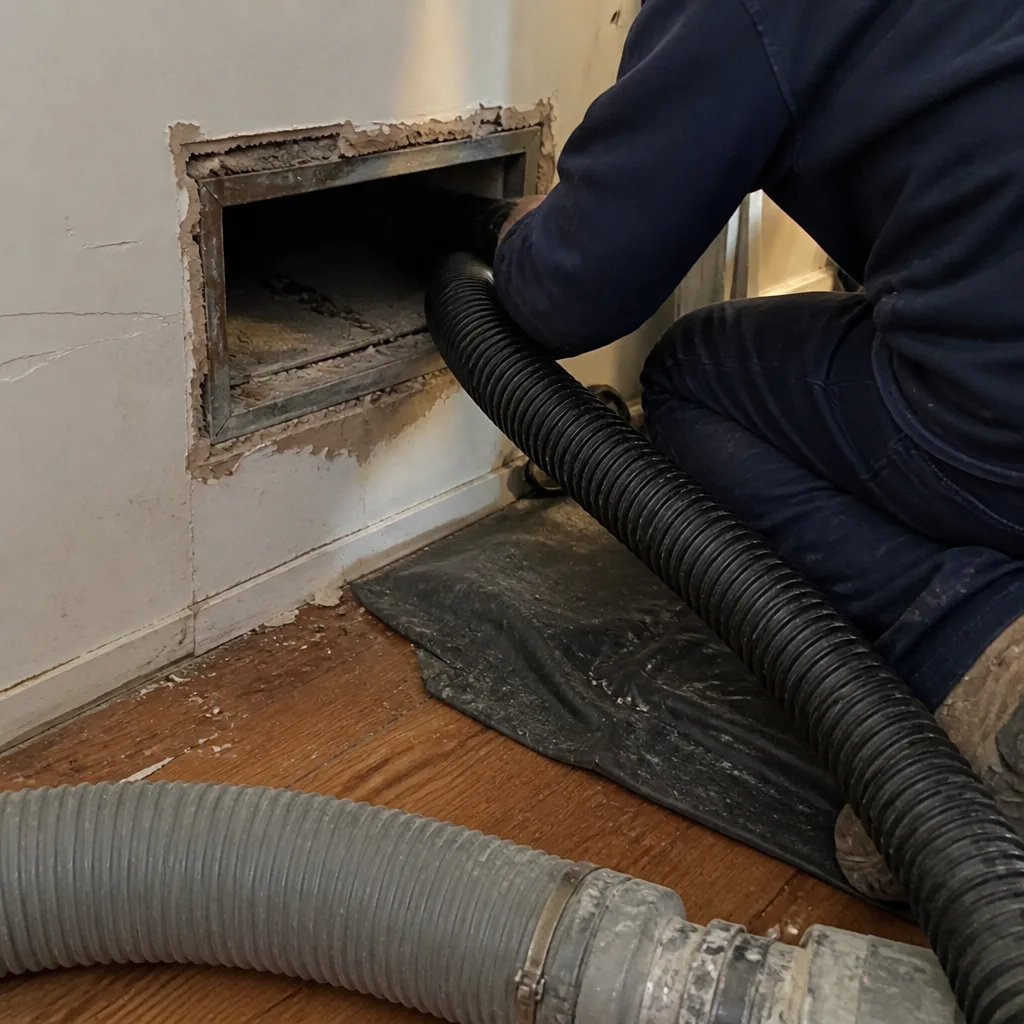 Before
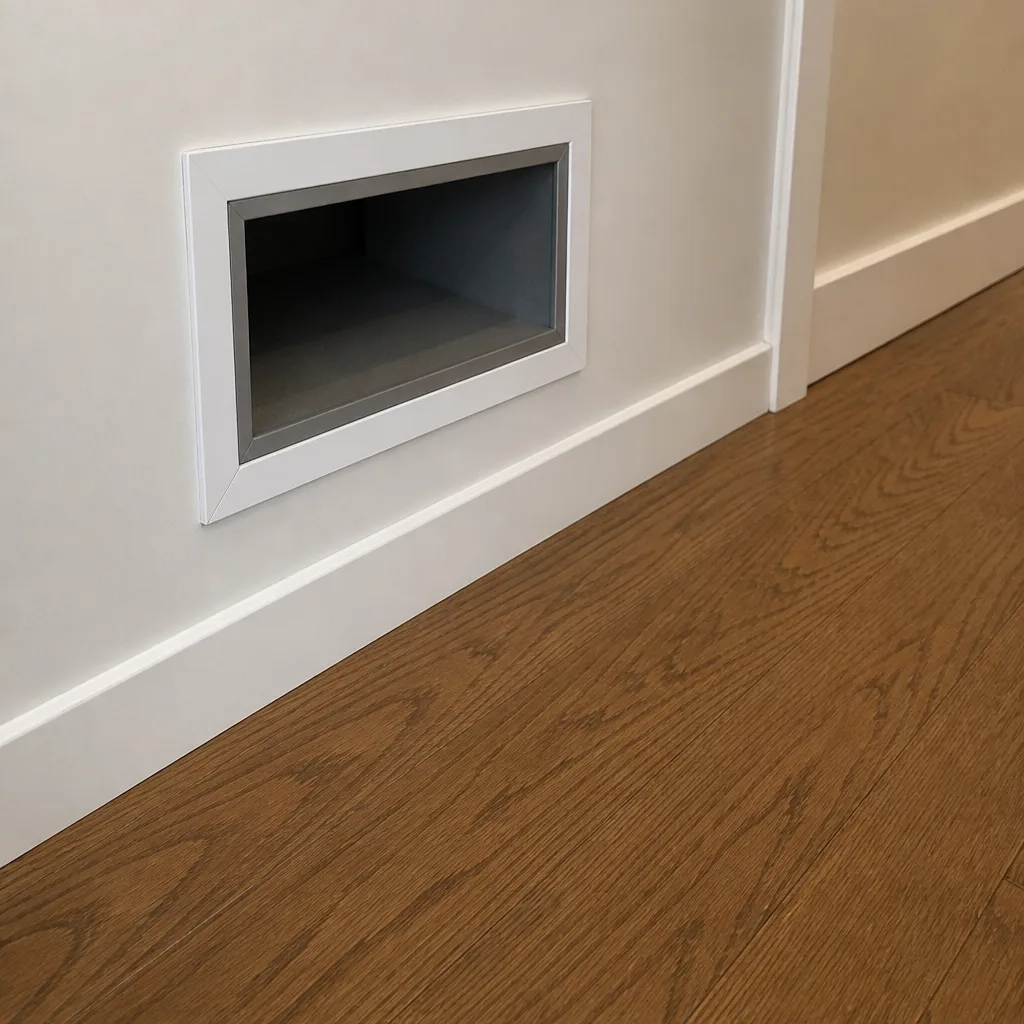 After
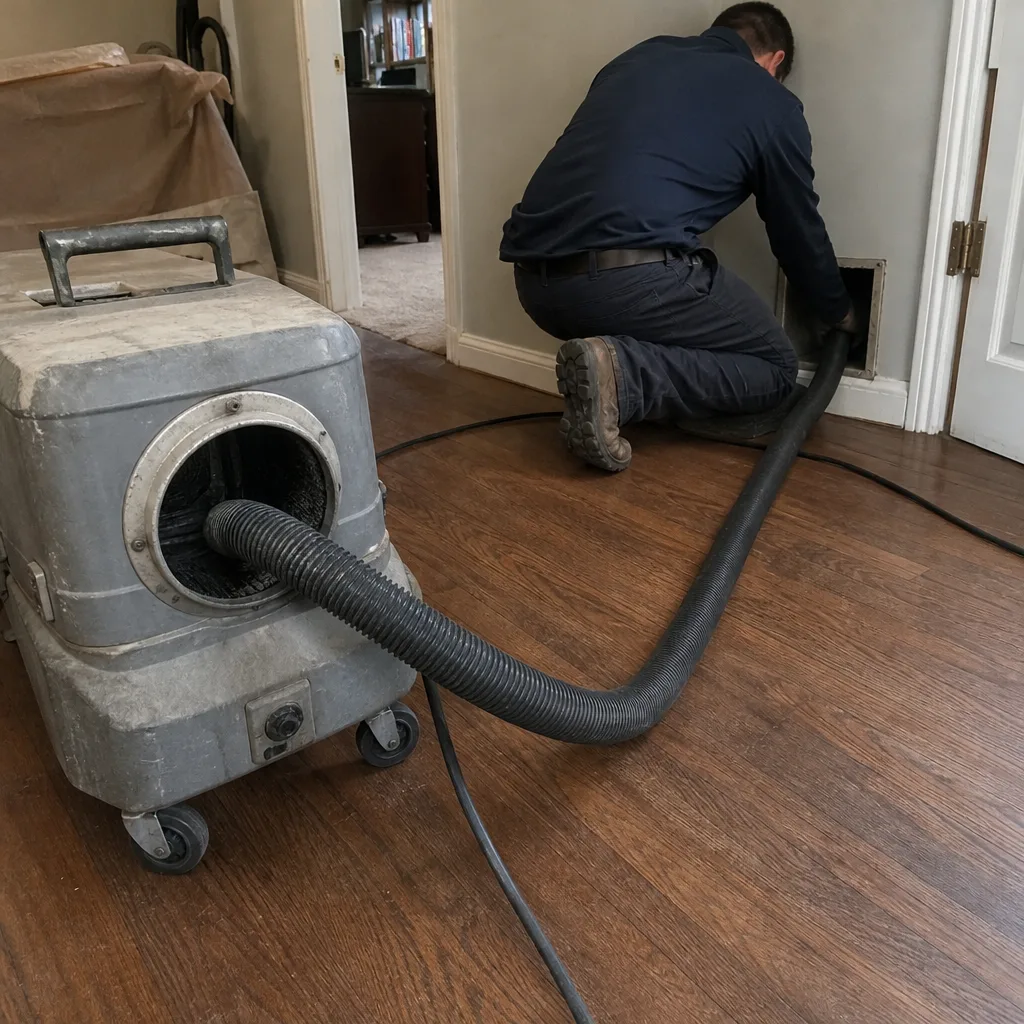 Before
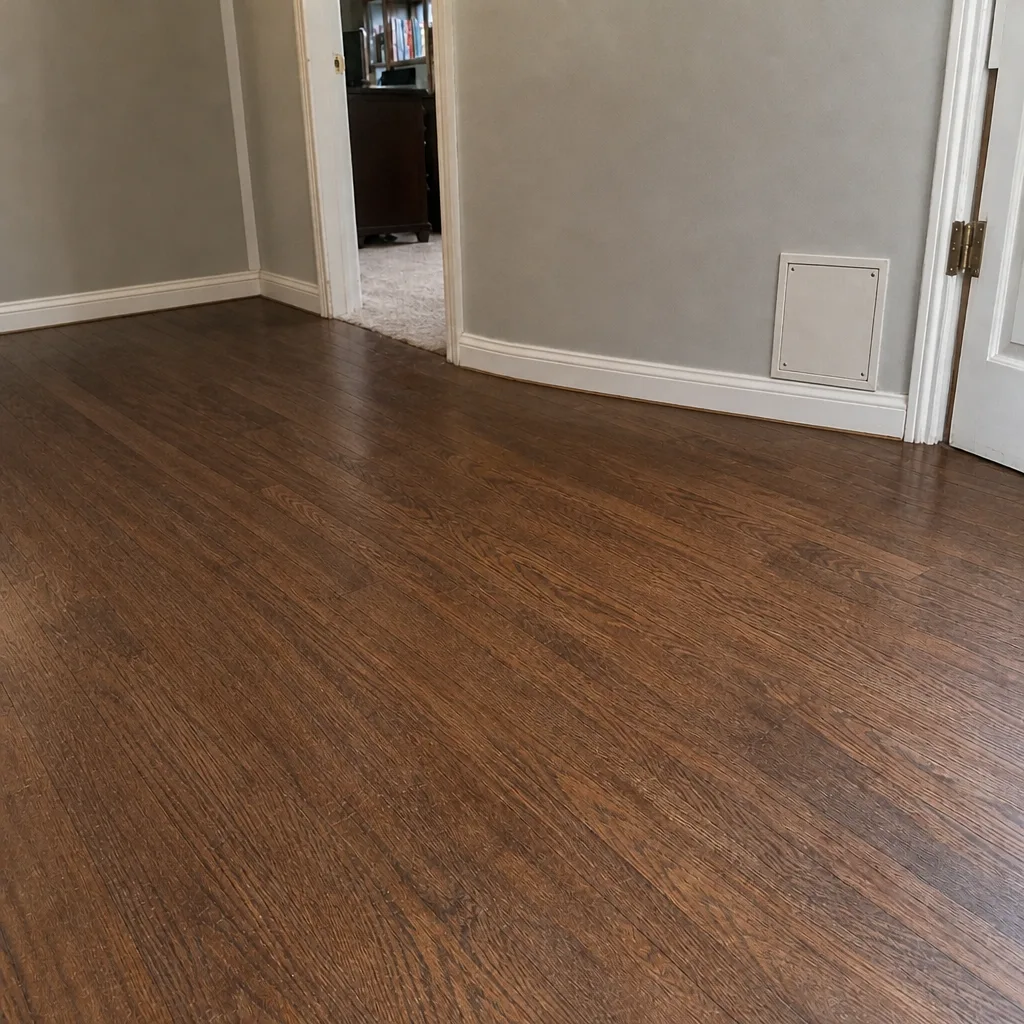 After
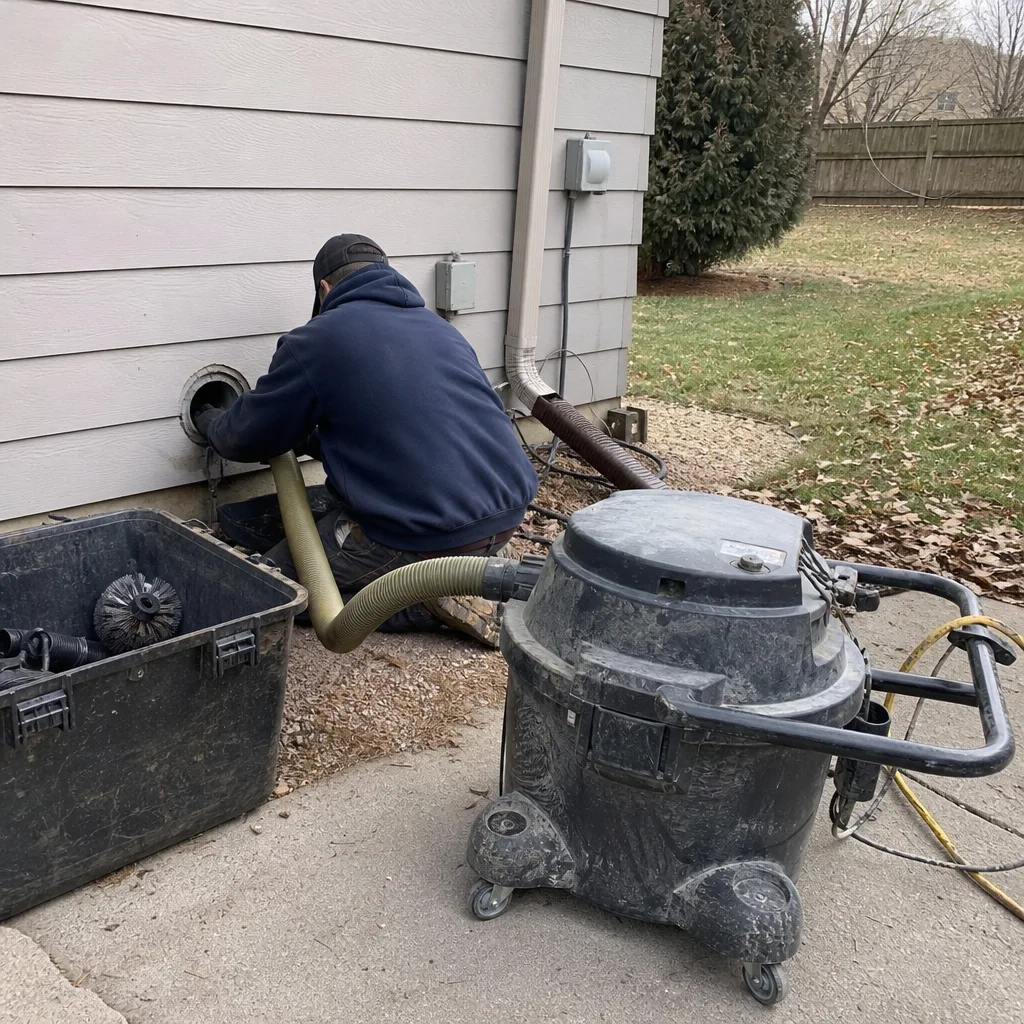 Before
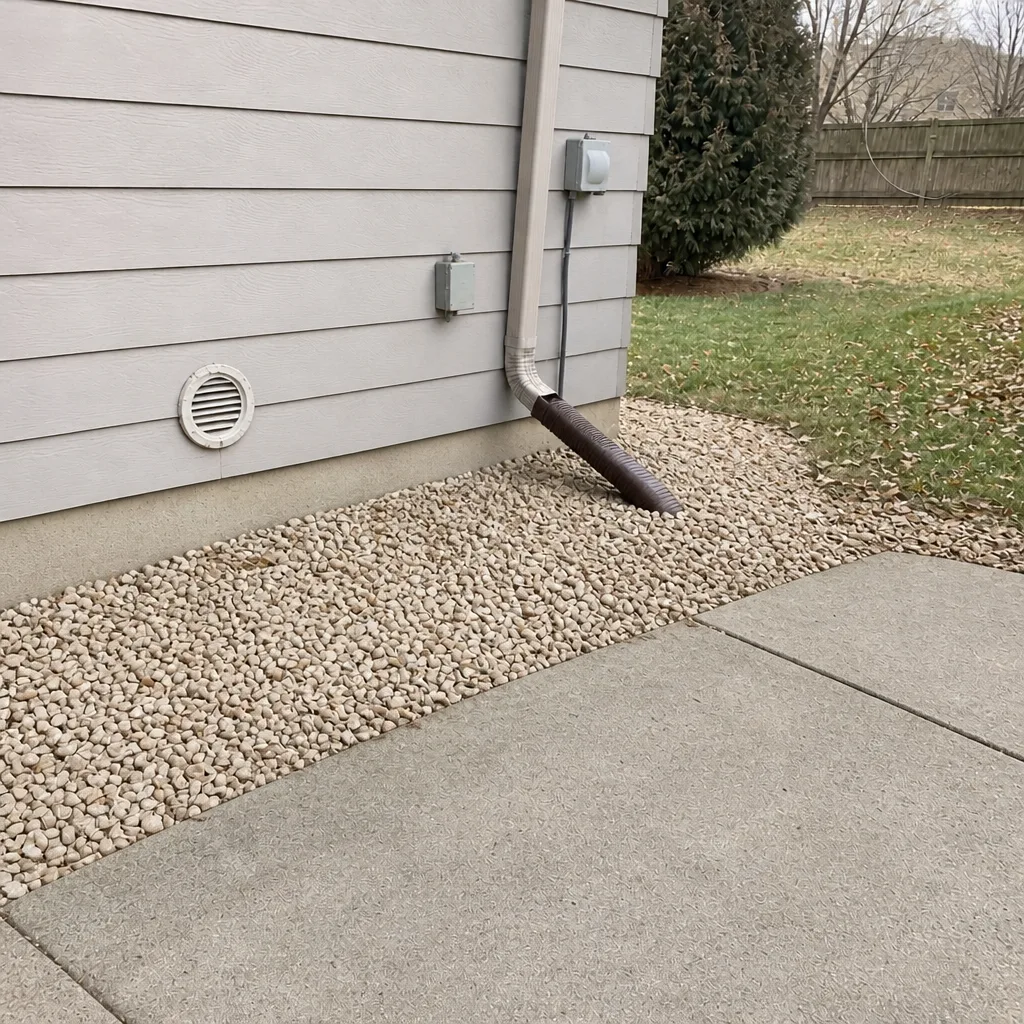 After
When to Call a Professional
Call for a professional assessment when you’ve done the walkthrough and found a pattern that points to the system rather than one room. That means: debris at the air handler cabinet, consistent debris across multiple supply registers, a musty smell that doesn’t fade at startup, or post-renovation dust visible in the return runs. Call sooner if the smell is burning or hot, which is a safety issue rather than a cleaning one. And call if the home has an IAQ concern, an allergy in the household, or Aprilaire or Honeywell equipment that needs to stay protected through the cleaning process. We offer free estimates in Centennial, and the conversation is straightforward. Call (888) 597-0329. We answer 24/7. Fast dispatch from 7am to 7pm, Sunday through Friday.
Frequently Asked Questions
Debris visible at the air handler cabinet is the most reliable sign. It means contamination has reached the supply plenum, which feeds the entire system. Register dust, by contrast, is almost never a reliable indicator. Call (888) 597-0329 for an exact quote; estimates are free.
The cost depends on the system, not on a per-vent count. Whole-system cleaning is typically quoted as one flat price for the home, agreed in writing before any work begins, based on the number of branches, the size of the trunk, and whether duct repair is needed. That flat price is the whole point, and it’s how we avoid the per-vent math that quietly inflates jobs. Call (888) 597-0329 for an exact quote; estimates are free.
Cheap quotes usually reflect a surface swipe rather than a full mechanical clean. A crew running a shop vac through the register boots and calling it done can quote very low, because that’s about four minutes per opening and no real containment. A job using a Rotobrush rotary brush system with a Nikro HEPA rig takes longer, uses more equipment, and costs more to run, but removes what’s actually on the duct walls. The equipment is the tell. Ask what equipment will be used before you compare prices. Call (888) 597-0329 for an exact quote; estimates are free.
Ask for before-and-after photos of your own ducts, taken inside the run rather than at the register. A technician who has actually cleaned the system can show you the difference. If the crew can’t produce photos of your specific ductwork, they didn’t document the job. Call (888) 597-0329 for an exact quote; estimates are free.
Most homes need duct cleaning every three to five years, not annually. The exceptions are homes with recent renovation, pets with heavy shedding, or a known moisture issue. If you’ve had a renovation within the last two years in Centennial, the interval shortens significantly. Call (888) 597-0329 for an exact quote; estimates are free.
It can, if the source is inside the duct system. A musty smell that fades after startup usually clears with a clean and deodorizing treatment. A musty smell that persists at every run time needs a proper assessment first, because it may involve microbial growth at the coil or trunk. Burning smells are a different problem entirely and warrant an urgent call. Call (888) 597-0329 for an exact quote; estimates are free.
The Bottom Line
Register dust is noise. The signal is inside the boot, at the air handler, and along the exterior wall runs in the attic. If you see consistent debris across branches, dust at the cabinet, musty odor that doesn’t clear, or post-renovation drywall powder in the returns, a professional assessment is warranted. If you see sweating on the duct that isn’t staining anything, it’s normal. If it is staining, that’s a moisture fix before a clean. Knowing which category you’re in keeps you from overpaying for a job you didn’t need, and from skipping a job that will keep getting worse. That’s the whole point of the walkthrough. Use it, note what you find, and call us when the pattern points to the system.
If you’re in Centennial and any of the signs above match what you’re seeing, we can come out and look. Duct Cleaning Centennial offers free estimates, and the assessment is the same conversation whether or not you book the work. Call (888) 597-0329. We answer 24/7. Fast dispatch from 7am to 7pm, Sunday through Friday.
For a full overview of our three services and how we approach a duct system, start with Duct Cleaning Centennial.
Written by the team at Duct Cleaning Centennial.