
Last updated November 16, 2026
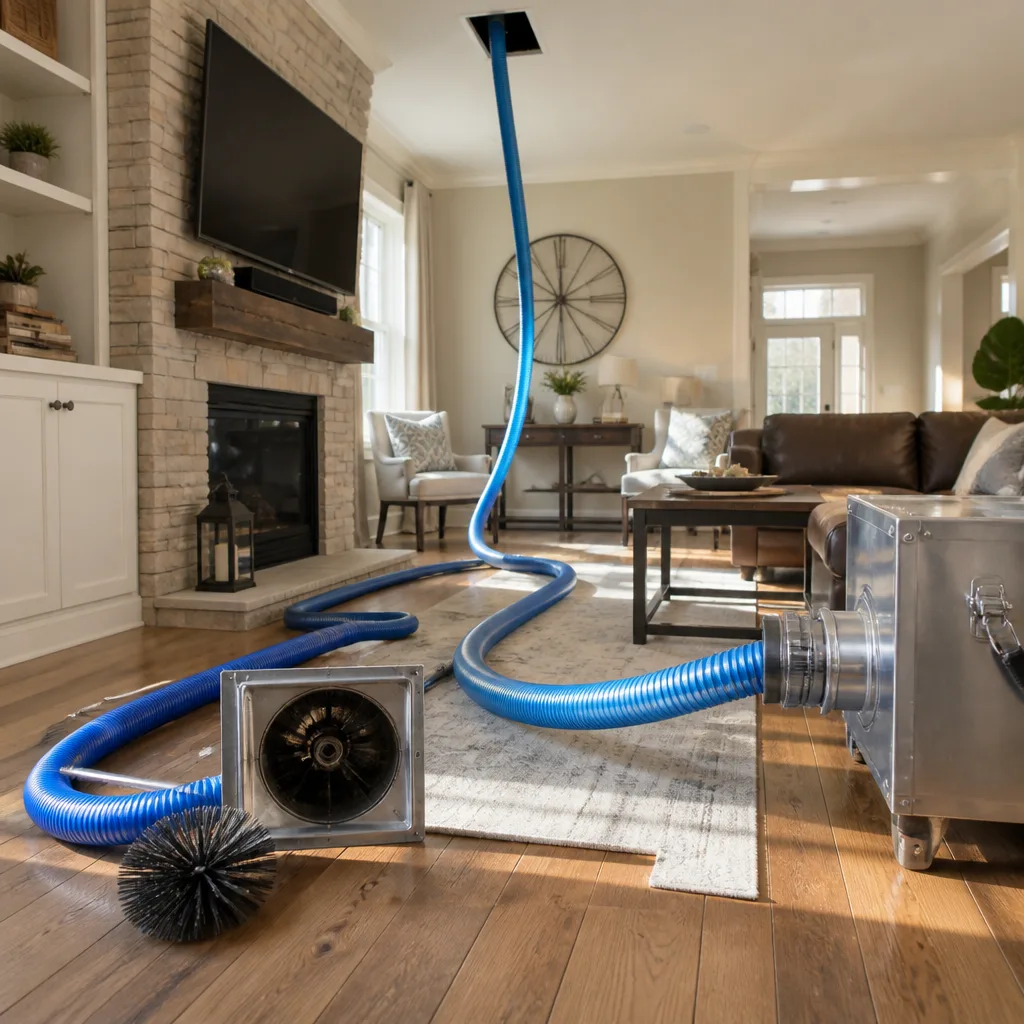 Whole-home duct cleaning
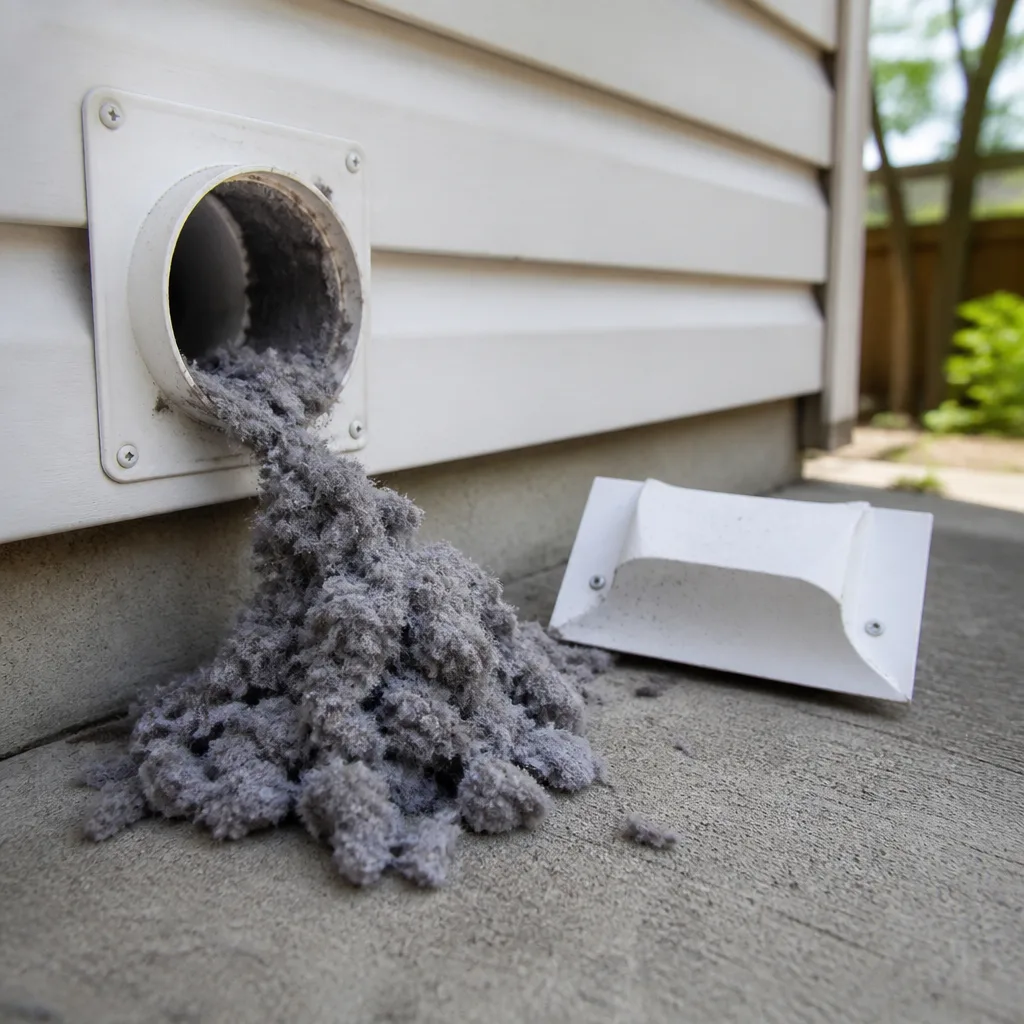 Dryer vent cleaning
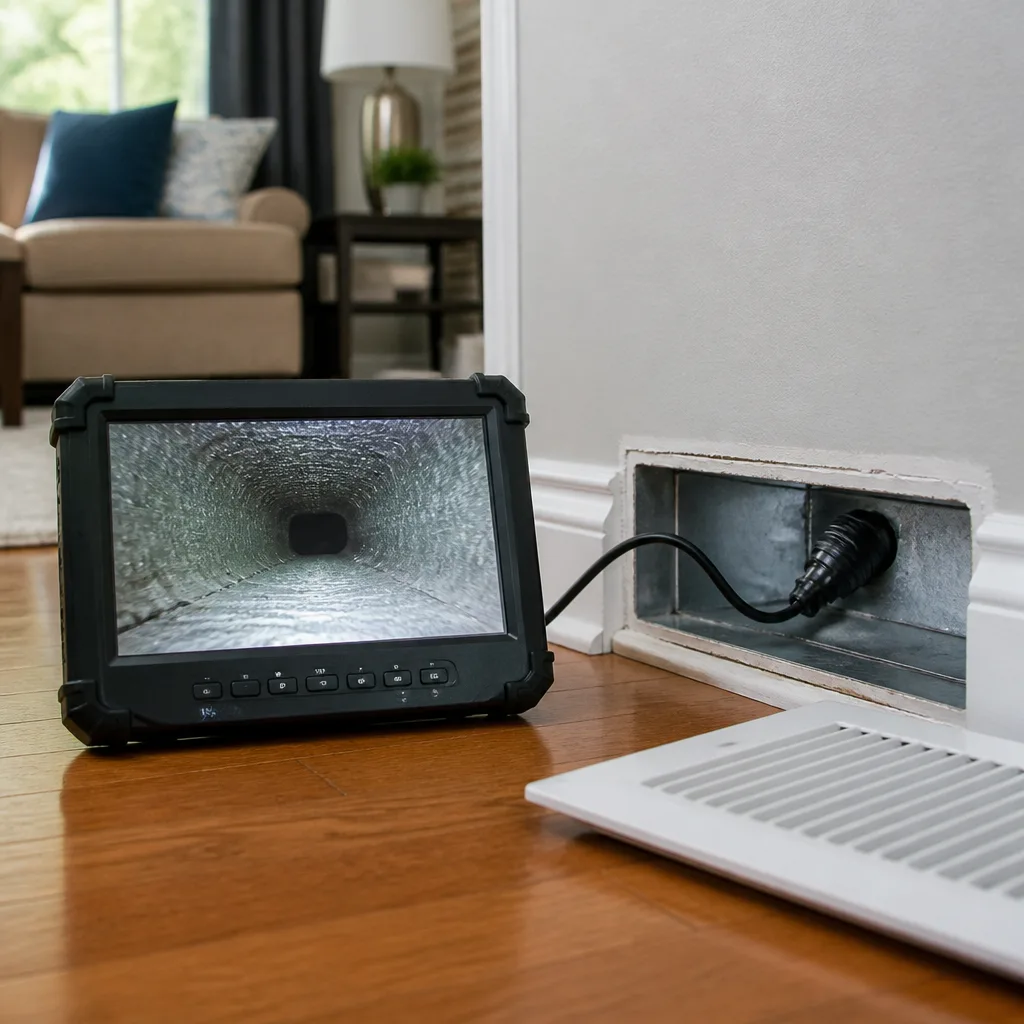 Camera inspection
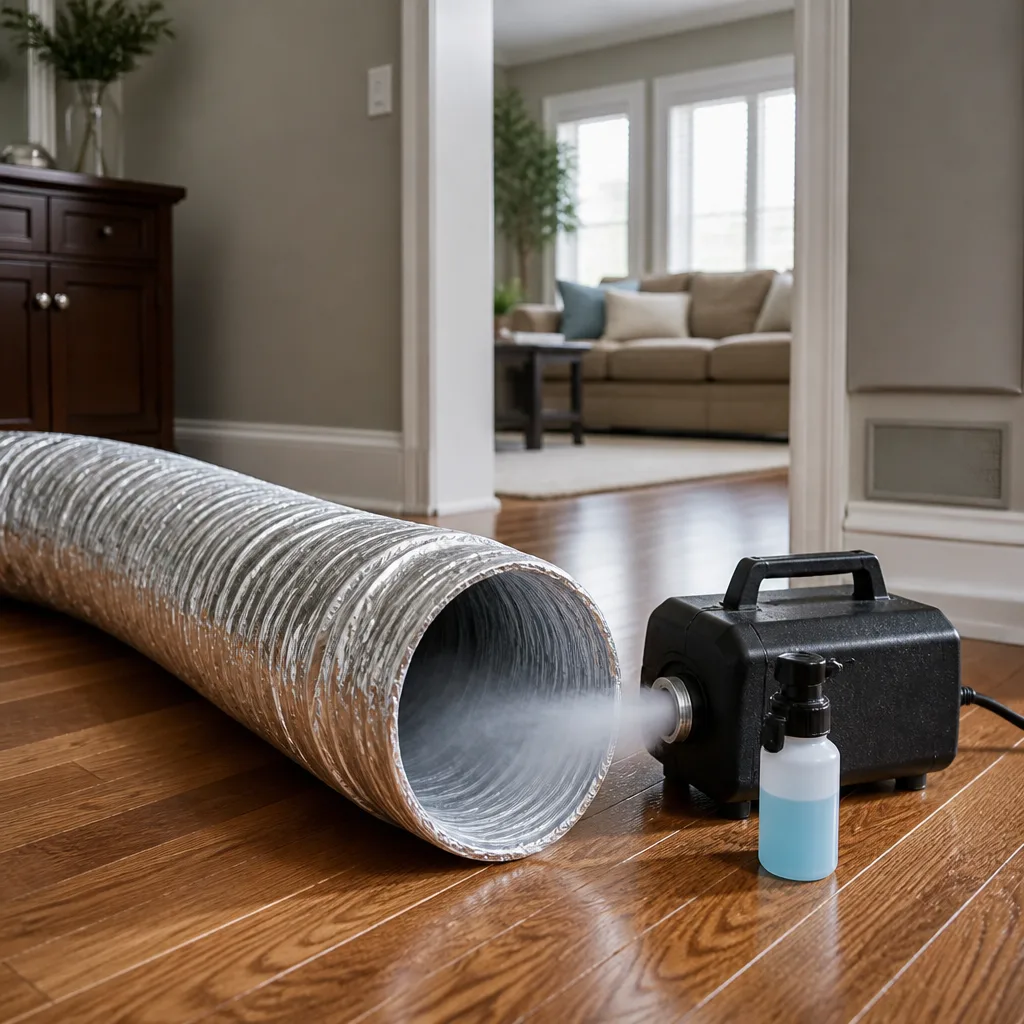 Sanitizing & deodorizing
Whole-system duct and dryer vent check with before-and-after photos - you see exactly what came out of your vents
That "$99 whole-house special" is a bait ad - the real number appears once they are in your hallway, or the "clean" is a shop-vac at the register. We photograph the inside of your ducts before and after instead.
Air Duct Cleaning Cost Breakdown: The Centennial Homeowner’s Reference for 2026
Two quotes for “whole-house duct cleaning” in Centennial can land hundreds of dollars apart and both use the same four words on the invoice. One covers the supply runs only. The other opens the main trunk, cleans the return side, wipes down the air handler cabinet, and verifies the result with a camera. They aren’t the same job, so they were never supposed to cost the same. Most pricing confusion in this trade comes from comparing scopes that were never equal to begin with. This reference breaks duct cleaning into its actual line items, shows what each one should cost and why, and gives you a way to read a written quote so you can tell a complete scope from a thin one. We’ll also cover the variables that move price in Centennial specifically.
Quick Answer
Air duct cleaning in Centennial typically runs about $350 to $700 for a standard single-story home, and $500 to $1,100 once you factor in a two-story layout or a finished basement with a secondary air handler. The number isn’t set by the number of vents alone. It’s driven by how much of the system actually gets opened and cleaned: main trunk access, supply side, return side, air handler cabinet, and post-work camera verification. A written quote that names all five of those line items is the one you can compare against another on equal terms.
Styles & brands we work with
- Whole-home duct cleaning
- Dryer vent cleaning
- Camera inspection
- Sanitizing & deodorizing
Table of Contents
- What per-vent pricing actually hides
- The five line items every complete quote should include
- Cost variables specific to Centennial homes
- What legitimately adds cost – and what rarely does
- How to read equipment specs in a quote
- How to compare two quotes on equal terms
- Dryer vent cleaning as a bundled line item
- Frequently asked questions
What per-vent pricing actually hides
A per-vent quote sounds generous. Ten vents at $30 sounds transparent. In practice, a per-vent number only tells you what the operator charges per opening, not what work happens inside those openings. And that’s where the math usually falls apart.
Each opening in a real duct cleaning job involves several minutes of labor and equipment time. A technician has to drive a rotary brush through the full run, work the brush back out, then connect a HEPA vacuum to pull the disturbed debris back into a contained waste bag. Professional-grade equipment like a Rotobrush rotary brush system paired with a Nikro HEPA vacuum is what makes that sequence possible without spreading dust through the house. On a well-equipped job, per-opening time typically lands between six and twelve minutes of hands-on work, depending on run length and whether the opening is a supply or a return.
Now run the multiplication. At a $30 per-vent price, ten vents grosses $300. Subtract travel, setup, containment, equipment depreciation, and the technician’s time, and the operator either takes a loss or skips something. What gets skipped, in our experience across Centennial homes, tends to be predictable:
- The main trunk gets bypassed. Only the branch runs off the trunk are cleaned.
- Returns get ignored because they’re often fewer in number and the operator can’t charge for them.
- The air handler cabinet stays sealed because the operator isn’t equipped to open it safely.
- No camera verification, so there’s no record of what was done.
- Negative-pressure containment never gets set up, which means debris goes into the living space instead of out.
That’s the trade-off baked into a low per-vent number: the operator isn’t cheaper, they’re smaller-scope. A $200 quote for “whole-house duct cleaning” and a $600 quote for the same four words can mean two entirely different jobs.
The five line items every complete quote should include
A complete duct cleaning quote is a written scope, not a lump price. Ours, and any operator worth comparing against, should break down the work into five distinct parts. When you have two quotes in front of you, check that each one names all five. If a quote lists fewer than four line items, it’s a smaller scope than the invoice label suggests.
- Main trunk access. The trunk is the large rectangular plenum that all branch runs tap into. Debris collects there first, and any operator who doesn’t open it is cleaning the branches of a system whose trunk is still loaded. This line item covers access, containment and trunk cleaning.
- Supply side cleaning. All the branch runs feeding conditioned air into rooms. This is the part of the job most people think of as “duct cleaning” and it’s usually the only thing on a thin quote.
- Return side cleaning. The return path pulls air back to the air handler, and it often carries more dust than the supply side because it sees unfiltered air from the living space first. Returns need to be cleaned or the system re-contaminates fast.
- Air handler cabinet cleaning. The metal cabinet around the blower and evaporator coil collects a fine layer of debris that a vent-only clean never touches. Opening it requires care – the evaporator coil is delicate and the blower is electrically live – which is why cut-rate operators leave it shut.
- Post-work camera verification. A camera run through the system after cleaning, with still images shared with the homeowner, is what turns “we cleaned the ducts” from a verbal claim into a documented result. Any quote missing this line item is asking you to take the operator’s word.
For a standard single-story Centennial home with 8 to 12 openings, those five line items together typically run $350 to $700. On a two-story home with a finished basement and a secondary air handler – a common layout in parts of Centennial – the range moves up to $500 to $1,100. The numbers aren’t set by the number of vents in isolation. They’re set by the number of line items the operator actually performs.
Cost variables specific to Centennial homes
Centennial’s housing stock spans a wide range, and the duct systems inside those homes vary as much as the homes do. Four variables matter most when a quote moves up or down.
Square footage ranges
A 1,200 square foot patio home and a 3,400 square foot two-story house don’t have comparable duct systems. Duct run length is roughly proportional to square footage, and longer runs mean more time per opening. Expect the low end of the range for compact homes and the upper end as you move into the 3,000+ square foot range common in newer Centennial neighborhoods.
Number of stories
A second story adds vertical trunk segments and often a second zone of branch runs feeding the upstairs. Two-story homes also take longer to set up and access, because the technician frequently needs to work from two separate connection points to get negative pressure on the full system. Figure the two-story premium at $100 to $200 over an equivalent single-story job.
Finished basement with a secondary air handler
A finished basement usually means a second air handler serving the lower level, sometimes with its own return. That doubles the cabinet-cleaning line item and adds return side work. On Centennial homes with a finished basement and split system, this is the single largest variable in a quote, often adding $150 to $300 to the total.
Duct material: flex versus rigid
Flex duct is corrugated and holds debris in its ridges; rigid metal duct is smoother but harder to access at joints. Flex tends to clean faster but may need more brush passes to release debris from the ribs. Rigid metal trunk liner often needs longer extraction time because the debris settles in low spots. Neither material is inherently more expensive to clean, but the mix inside a given home moves labor time up or down. Older Centennial homes built in the 1970s and 1980s lean rigid; newer builds lean flex.
What legitimately adds cost – and what rarely does
Not every add-on a quote offers is worth the money, and not every add-on is padding. Here’s the split we’d draw, based on what actually extends the life of the duct system.
Legitimate add-ons
- Mold treatment. If the camera inspection finds active biological growth on duct liner or the air handler coil, treatment is warranted. It’s a specific scope, not a cleaning upsell, and it should be quoted separately with photos of the finding.
- Duct sealing. Sealing leaks in the seams and joints of the duct system reduces losses between the air handler and the registers. On homes with visible gaps at trunk taps or older taped joints, sealing pays back through efficiency. It’s a distinct job from cleaning and should have its own line item.
- Dryer vent cleaning as a bundled service. The dryer vent is a separate duct, but it’s a real one, and bundling it with a duct cleaning appointment saves the second trip. See the dedicated section below.
- Camera inspection reports. Only legitimate when they document a finding the customer needs to see – a crack, a disconnected run, mold growth, an obstruction. “Camera inspection included” on every job without sharing the images is a marketing line, not a deliverable.
Add-ons that rarely justify the price
- “Sanitizing mist” above and beyond cleaning. Cleaning removes the debris the biological growth feeds on. A fogged sanitizer without a cleaning is surface treatment on a dirty surface.
- UV light installation pitched alongside a cleaning. UV systems are a real IAQ component, but they aren’t a duct cleaning line item and shouldn’t be tied to one. If they’re recommended, it should be based on a specific finding and quoted separately.
- Filter subscription plans. Filters matter, but they’re a maintenance purchase, not part of a duct cleaning scope. Be wary of quotes that pad the duct cleaning with a filter package priced far above retail.
- “Deodorizing treatment” for pet or cooking odors. Odor molecules settle into debris. Removing the debris removes the odor. A separate deodorizing spray is often an unnecessary add-on unless a specific source has been identified and photographed.
One category that sits in the middle: post-cleaning protective treatment. A product like Guardsman applied to the interior of the duct system after cleaning helps the clean last longer by creating a barrier that makes future debris less likely to adhere. It’s a reasonable add-on on homes where the first cleaning released a heavy debris load, but it’s not essential on a clean-and-done job. Ask for a separate line item and decide.
How to read equipment specs in a quote
The fastest way to spot an underequipped operator is to look at what equipment the written quote names. A quote that doesn’t specify equipment is telling you it doesn’t have equipment worth specifying.
Here’s what a professional-grade scope looks like:
- Rotobrush rotary brush system. The industry-standard rotary brush for residential duct cleaning. It drives a brush through the full run, working the interior walls of the duct, then retracts. Named brand, residential-grade, comparable to what commercial restoration work uses.
- Nikro HEPA vacuum rig. The connected vacuum pulls the disturbed debris into a contained HEPA waste bag. HEPA vacuum is the operative phrase – a shop vac is not a HEPA vacuum, and the difference is where the fine particulate ends up.
- Negative-pressure containment. The full system is put under negative pressure while the work happens so debris flows toward the vacuum instead of into the rooms. Without containment, the cleaning itself becomes an indoor air quality problem.
- Camera verification equipment. A duct inspection camera used both before and after cleaning, with the after-images shared with the homeowner.
- Post-treatment products. Guardsman protective treatment is the kind of item that should appear as an optional line, applied after cleaning to help the result hold.
IAQ-sensitive homes deserve an extra layer of equipment spec. Abatement Technologies air-scrubbing equipment is in the same class as what’s used on commercial and restoration jobs, and it makes sense on homes where air quality is a specific concern, not a nice-to-have. If a quote from a Centennial operator never mentions air-scrubbing capability, ask whether they can bring it. If they can’t, that tells you something about their equipment range.
We run professional-grade Rotobrush and Nikro equipment, not shop vacs, and stock Abatement Technologies air-scrubbing units because the requests come in from Centennial homes where IAQ is a real constraint. Aprilaire and Honeywell components are part of the assessment too – if the home already has an air quality system installed, we work around it rather than through it.
How to compare two quotes on equal terms
Two quotes in front of you, hundreds apart, both labeled “whole-house duct cleaning.” Here’s a numbered sequence for reading them side by side so the scope differences surface.
- Check the line items. Both quotes should name the same five from the line-items section above. Whichever quote is missing one, mentally scope-adjust it up before comparing price.
- Check equipment names. Rotobrush and Nikro are the equipment markers to look for. Vague words like “professional equipment” without brand do not count. If neither brand appears, ask for the specification in writing.
- Check for negative-pressure containment. Any qualified operator will state this in the quote. It’s the difference between a cleaning and a dust dispersal event.
- Check for camera verification. Pre and post images, included in the written quote. If it isn’t in the quote, ask.
- Check what’s excluded. A short “not included” list in a complete quote is a good sign – it means the operator is being specific about scope. An empty exclusions list on a suspiciously low price is usually the reverse.
- Confirm the price is per system, not per vent. One flat price per system, agreed before work starts, is the only structure that lets you compare two quotes honestly. Per-vent pricing hides the scope comparison until the technician is on site.
- Ask for before-and-after photos of your own system. Any quote worth signing includes a written commitment to provide them. The photos are the proof the work happened.
If you’re comparing against a written quote and want to know what the Centennial market actually looks like, our air duct cleaning page lays out the scope and the range together so you can put them next to each other.
Dryer vent cleaning as a bundled line item
Dryer vent cleaning is a separate duct from the HVAC system, but bundling it with a duct cleaning appointment is a legitimate cost saver – one trip, one setup, one footprint through the house. It’s also worth doing on a schedule rather than waiting for the dryer to complain.
A clogged dryer vent doesn’t just dry clothes slowly. It traps heat and lint, and that’s a fire risk the home can’t afford. In Centennial’s dry climate, lint moves easily: it becomes airborne during every load and settles into the vent run, especially on the flexible transition hose and the vertical section behind the wall. Homes with a long run from the dryer to the exterior wall can clog faster than a short one.
A real dryer vent cleaning involves actually removing the clog – a brush through the full run plus the vacuum rig to pull the debris out – not just brushing the first six inches. If a quote promises a “dryer vent cleaning” without mentioning extraction equipment, ask what happens to the debris that gets loosened. Loosened lint with no extraction is just a slower fire risk.
For homeowners in Centennial, we typically quote dryer vent cleaning as a bundled line on a duct cleaning job rather than an add-a-trip call – it’s a cleaner deal for the customer. Our dryer vent cleaning page covers the full scope if you want the detail.
Common Mistakes to Avoid
- Comparing a per-vent price to a per-system price. They measure different things. Convert the per-vent quote to what a full system scope would cost (add the missing line items) before you decide which is cheaper.
- Assuming “whole-house” means the returns too. Plenty of quotes use “whole-house” to mean supply-side only. Confirm returns are listed separately, because they are the higher-debris side of most Centennial systems.
- Accepting a quote with no camera verification. A pre and post camera run is the only evidence the cleaning happened in the parts of the duct you can’t see. If it isn’t offered, ask for it as a line item.
- Bundling a dryer vent cleaning without checking what equipment the operator brings. A brush-and-hop job doesn’t remove the clog. Confirm extraction equipment is part of the scope.
- Buying a sanitizer or UV system as part of a duct cleaning without a documented finding. Legitimate treatment follows a photographed problem. A sanitizing mist applied without a cleaning underneath it is treating a dirty surface.
- Skipping the air handler cabinet because it’s “not part of duct cleaning.” It’s the largest single debris trap in the system in most homes. A quote that leaves it out isn’t doing the full job, regardless of how many vents it names.
- Assuming a low bid means a small home. A small home has less duct, but the per-vent price on a small home can still be small-scope. The line items, not the price, are what tell you the size of the job.
See the difference
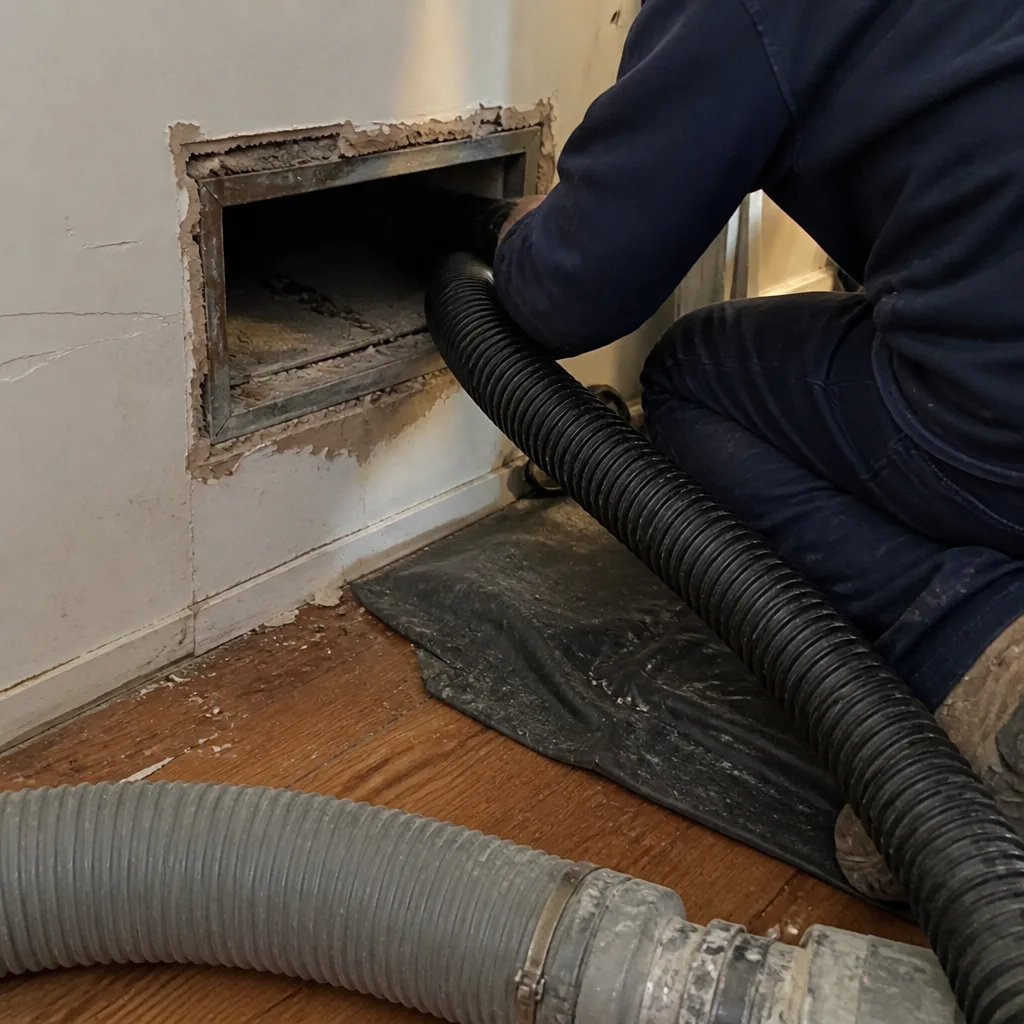 Before
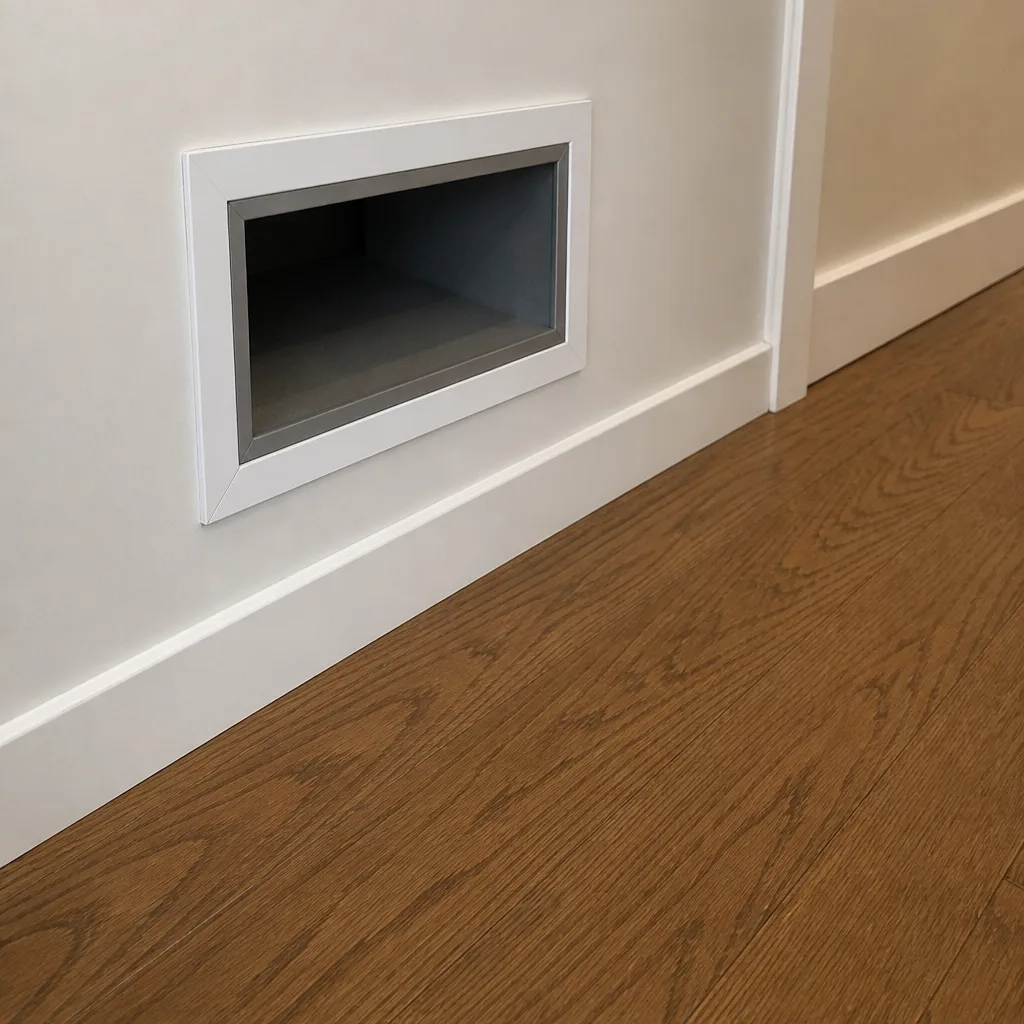 After
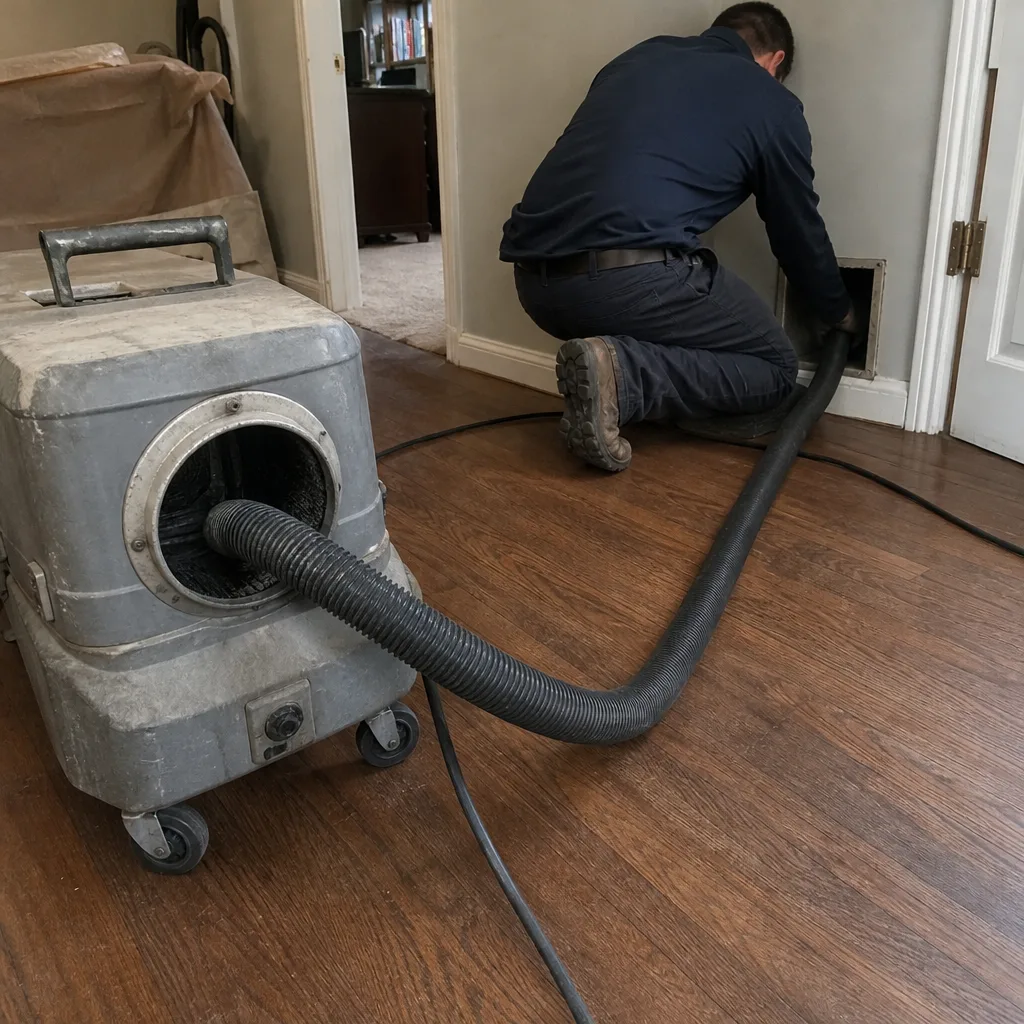 Before
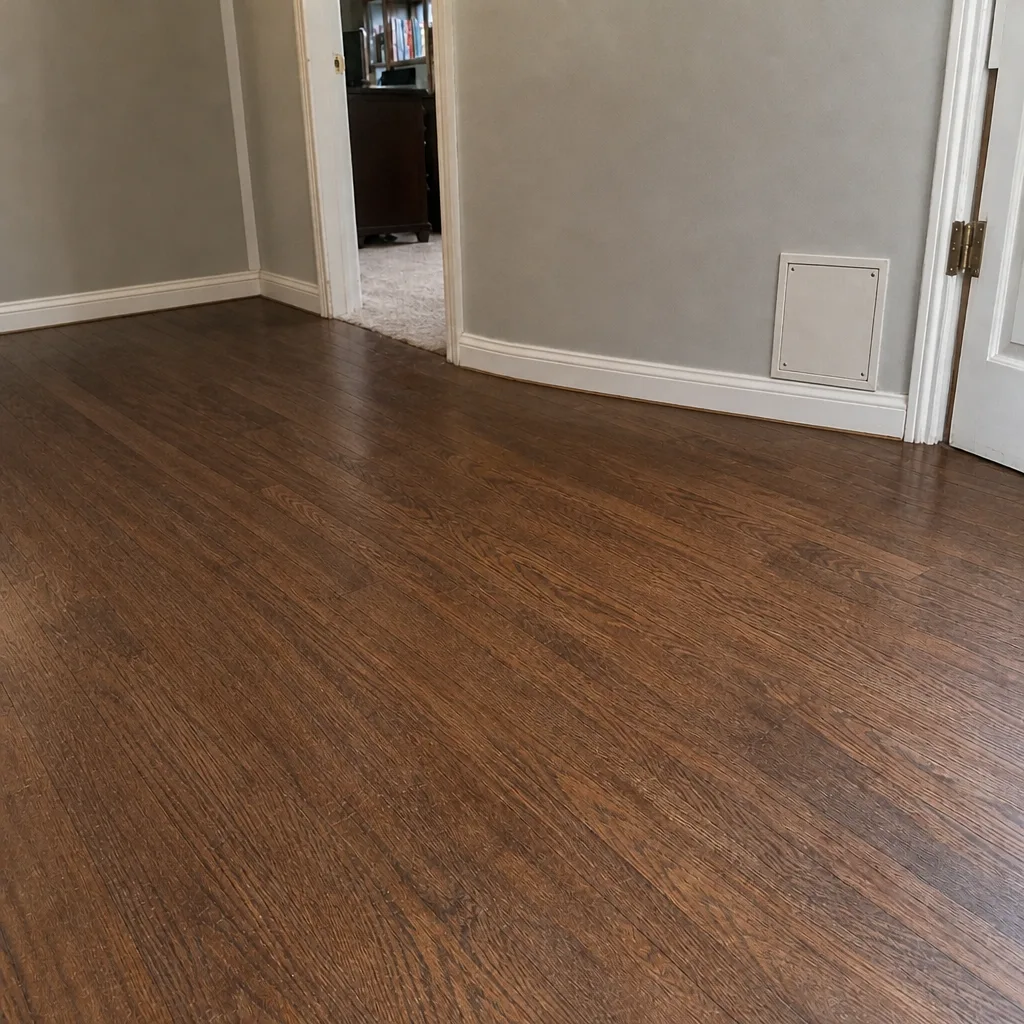 After
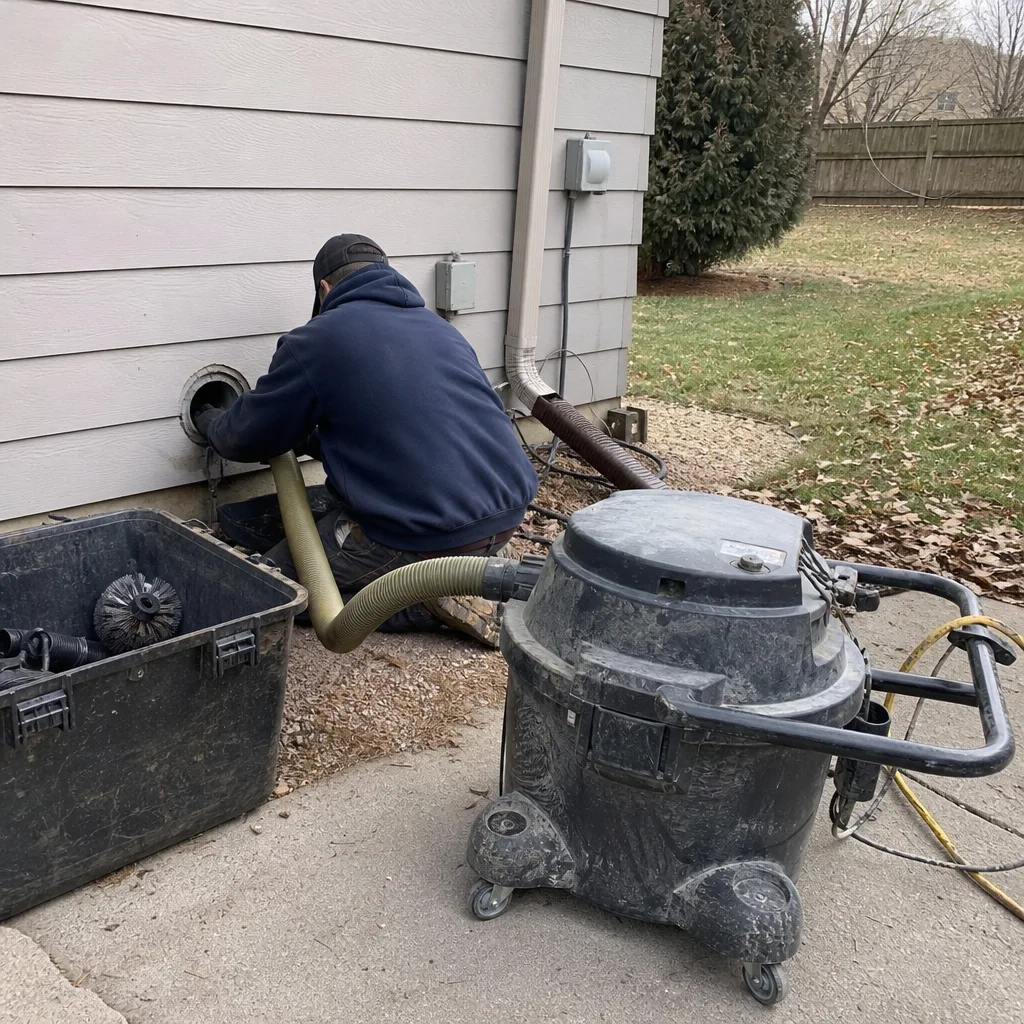 Before
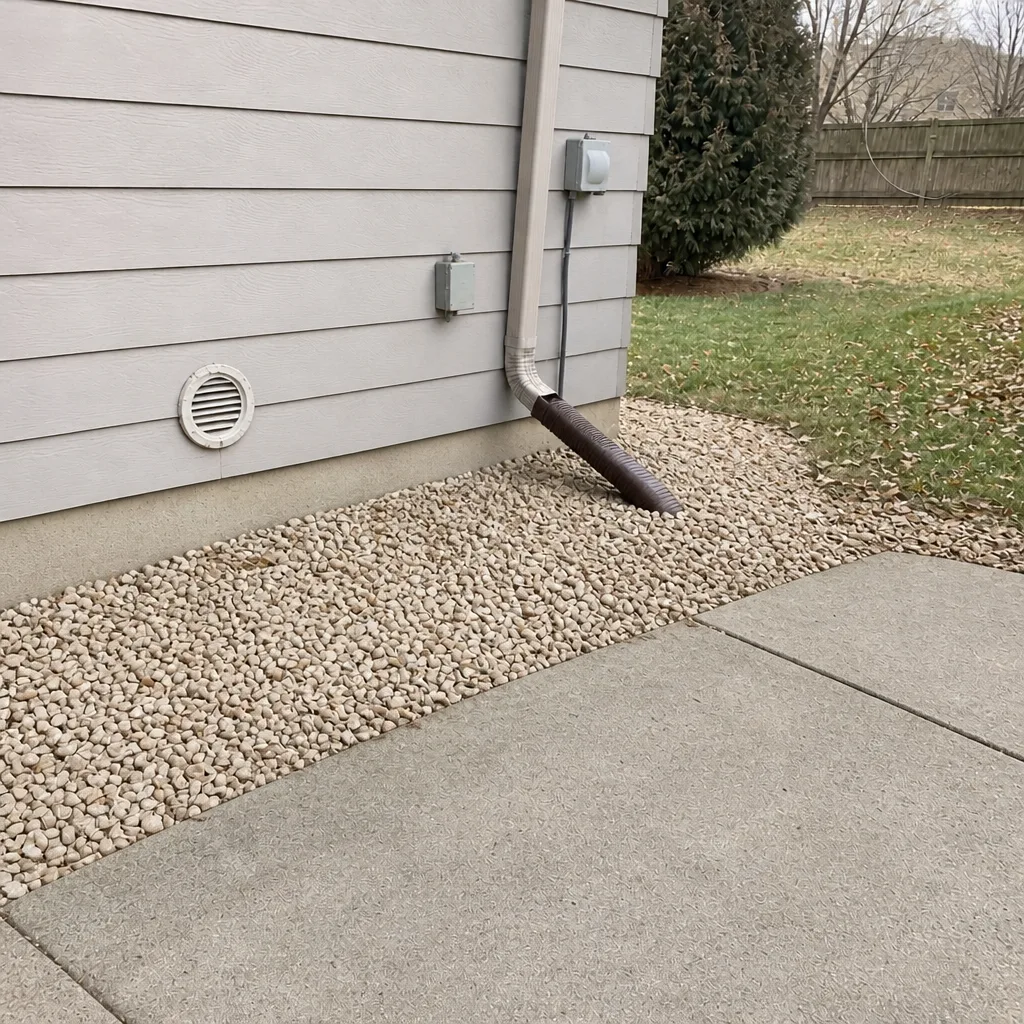 After
When to Call a Professional
Call for a duct cleaning when you’re seeing visible dust trails at the registers, when a recent renovation released drywall or construction dust into the system, when you’ve moved into a home and don’t know when the ducts were last cleaned, or when allergy and respiratory symptoms seem worse indoors. Call for a dryer vent cleaning when a load of laundry takes noticeably longer than it used to, or when the exterior vent flap doesn’t open freely. Call for duct cleaning Centennial service when the two scopes above have a line item you’re not sure includes your air handler – the answer usually moves the price.
Any of those situations warrants a written quote before work begins. Duct Cleaning Centennial offers free estimates in Centennial – call (888) 597-0329. We answer 24/7. Fast dispatch from 7am to 7pm, Sunday through Friday. Our technicians have up to 10 years of experience and work with professional-grade Rotobrush and Nikro equipment on every job.
Frequently Asked Questions
Air duct cleaning in Centennial typically runs $350 to $700 for a single-story home with a standard 8 to 12 vent system, and $500 to $1,100 for a two-story home or one with a finished basement and a secondary air handler. The written estimate sets the final price. The range depends on the line items in scope: main trunk, supply side, return side, air handler cabinet, and camera verification all have to be included for the price to represent the full job. Call (888) 597-0329 for an exact quote – estimates are free.
Cheap quotes are cheaper because they’re covering a smaller scope, not because they found a way to do the same job for less. A low per-vent number usually means the main trunk is bypassed, returns are skipped, the air handler cabinet stays shut, and no camera verification is offered. The price is real – it’s just for a different job than a full-system clean. Getting the full five line items named in writing is the only way to compare a low quote to a complete one. Call (888) 597-0329 and we’ll walk you through what a complete scope looks like for your home.
You know the work was done when the operator gives you before-and-after camera images of your own ducts. A written quote that commits to sharing those images is the deliverable. Insist on it. Any operator who can’t or won’t provide post-work camera verification is asking you to take their word. Call (888) 597-0329 – we share before-and-after photos as part of every job.
Air duct cleaning typically needs doing every three to five years for a well-maintained home, sooner after a renovation, a move-in to a home with unknown history, or if pets and allergies are part of the household. Flex duct in newer Centennial builds can hold debris faster than rigid metal because of the corrugation; rigid metal in older homes can collect more in the low spots of the trunk. The right interval depends on the home. Call (888) 597-0329 for a free estimate and we’ll give you a straight read on whether the ducts need cleaning now or later.
Yes, a finished basement with a secondary air handler typically adds $150 to $300 to a duct cleaning quote, because it doubles the air handler cabinet cleaning line item and often adds a second return path. In Centennial homes with a finished basement and split system, this is the single biggest variable between two otherwise similar quotes. If a quote doesn’t ask about a secondary air handler, ask whether they’ve accounted for it. Call (888) 597-0329 with your home’s layout and we’ll give you a scope-specific range.
Yes, dryer vent cleaning can be bundled into the same appointment as duct cleaning, and that’s usually the better deal because it avoids a second trip and setup. The dryer vent is a separate duct and a separate scope, so it will appear as its own line item in the written quote. Confirm the operator brings extraction equipment for the vent – not just a brush – so the loosened lint actually gets pulled out. Call (888) 597-0329 to combine both in one estimate.
The Bottom Line
Duct cleaning pricing in Centennial is confusing because the industry uses the same four words for wildly different scopes. A $200 quote and a $600 quote for “whole-house duct cleaning” are usually describing different jobs – one that touches supply runs only, one that opens the trunk, cleans both sides, addresses the air handler cabinet, and documents the result with camera verification. Read every quote against the five line items, ask what equipment is being used, and confirm the price is per system rather than per vent. When you have two complete scopes side by side, the comparison stops being about price and starts being about which one leaves your system actually clean. The written estimate sets the final price.
If you’re ready to compare a complete scope against what you’ve been quoted, call Duct Cleaning Centennial at (888) 597-0329. We answer 24/7. Fast dispatch from 7am to 7pm, Sunday through Friday. Free estimates in Centennial, with one flat price per system agreed before work starts, before-and-after photos of your own ducts, and professional-grade Rotobrush and Nikro equipment on every job.
Written by the team at Duct Cleaning Centennial.