
Last updated November 16, 2026
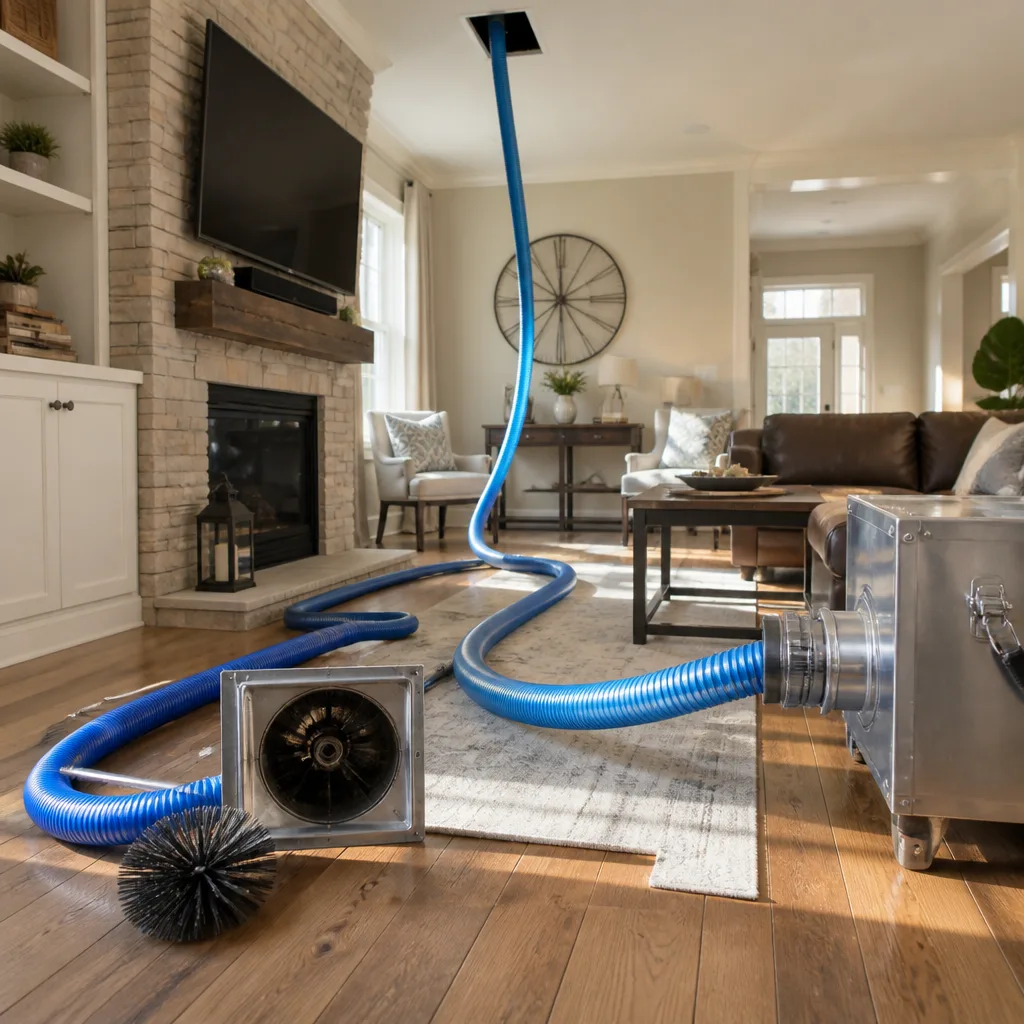 Whole-home duct cleaning
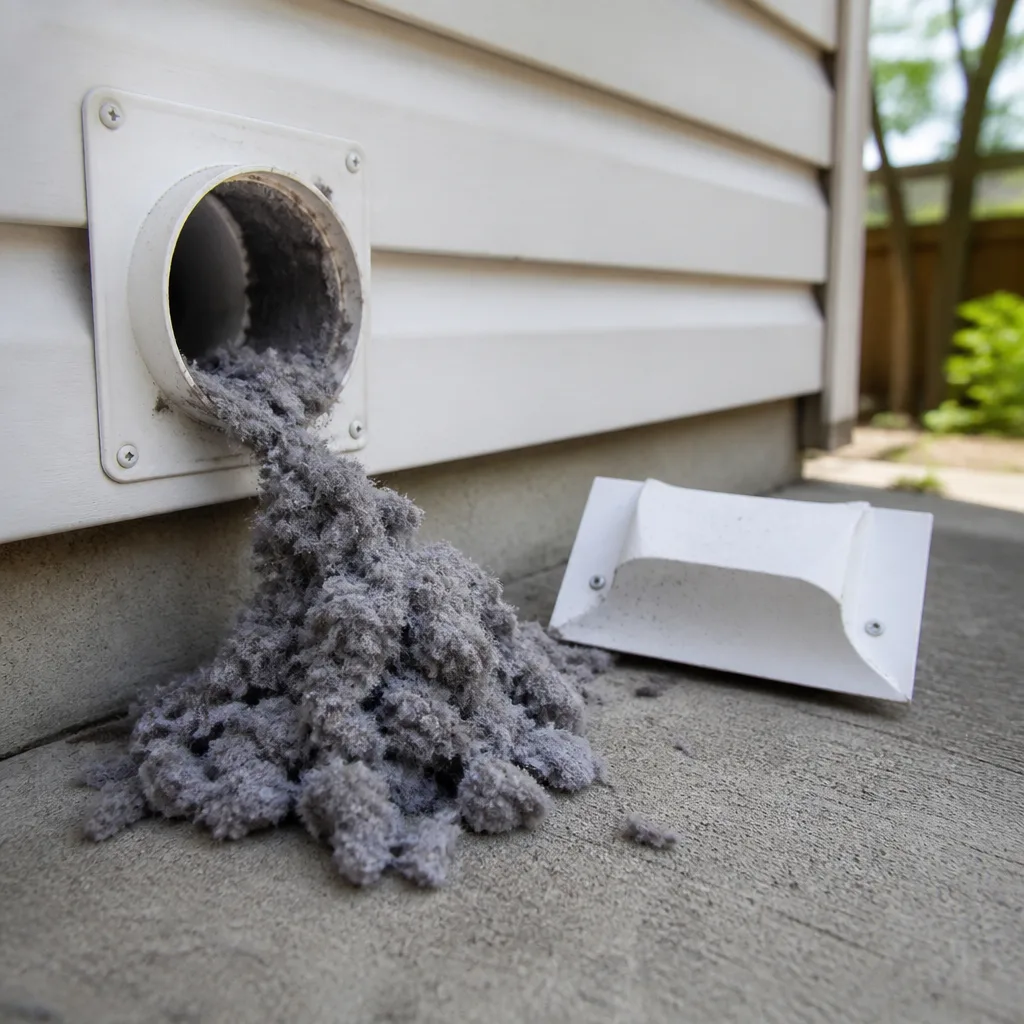 Dryer vent cleaning
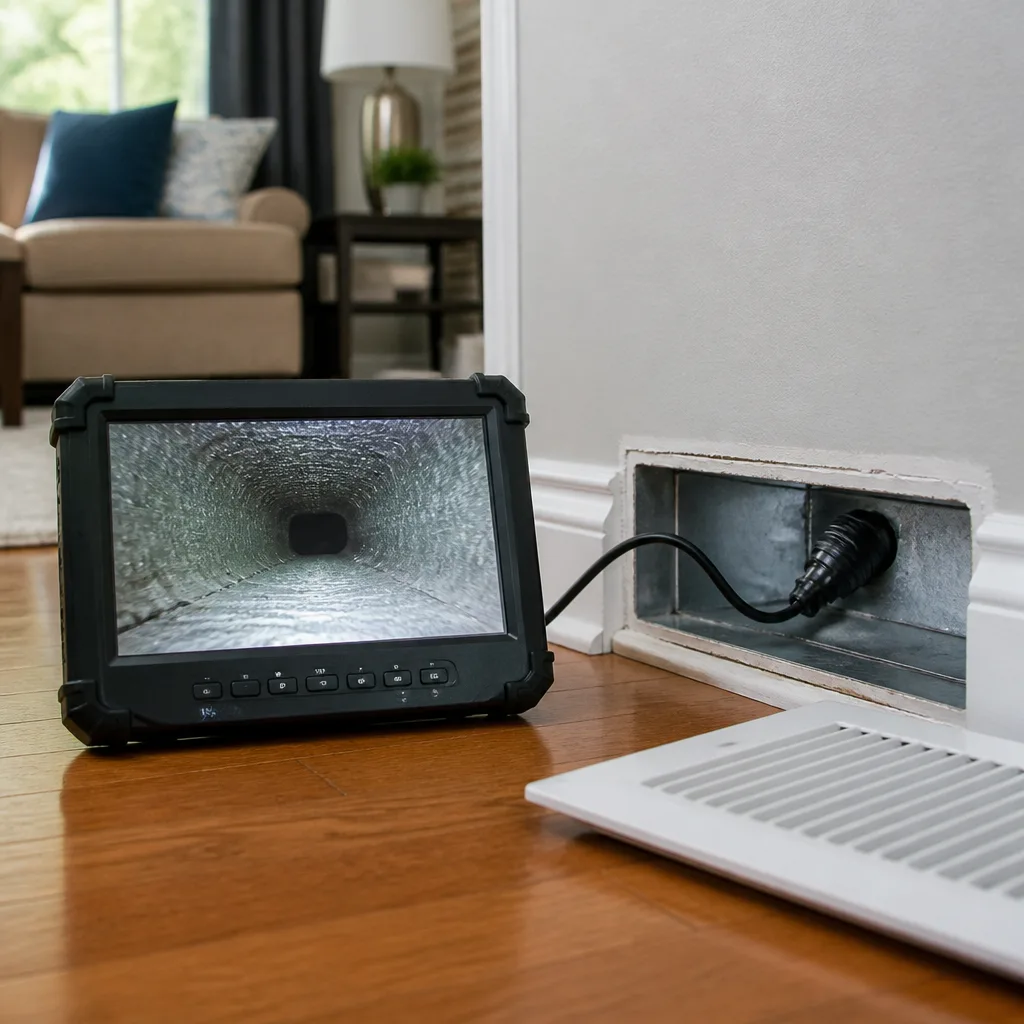 Camera inspection
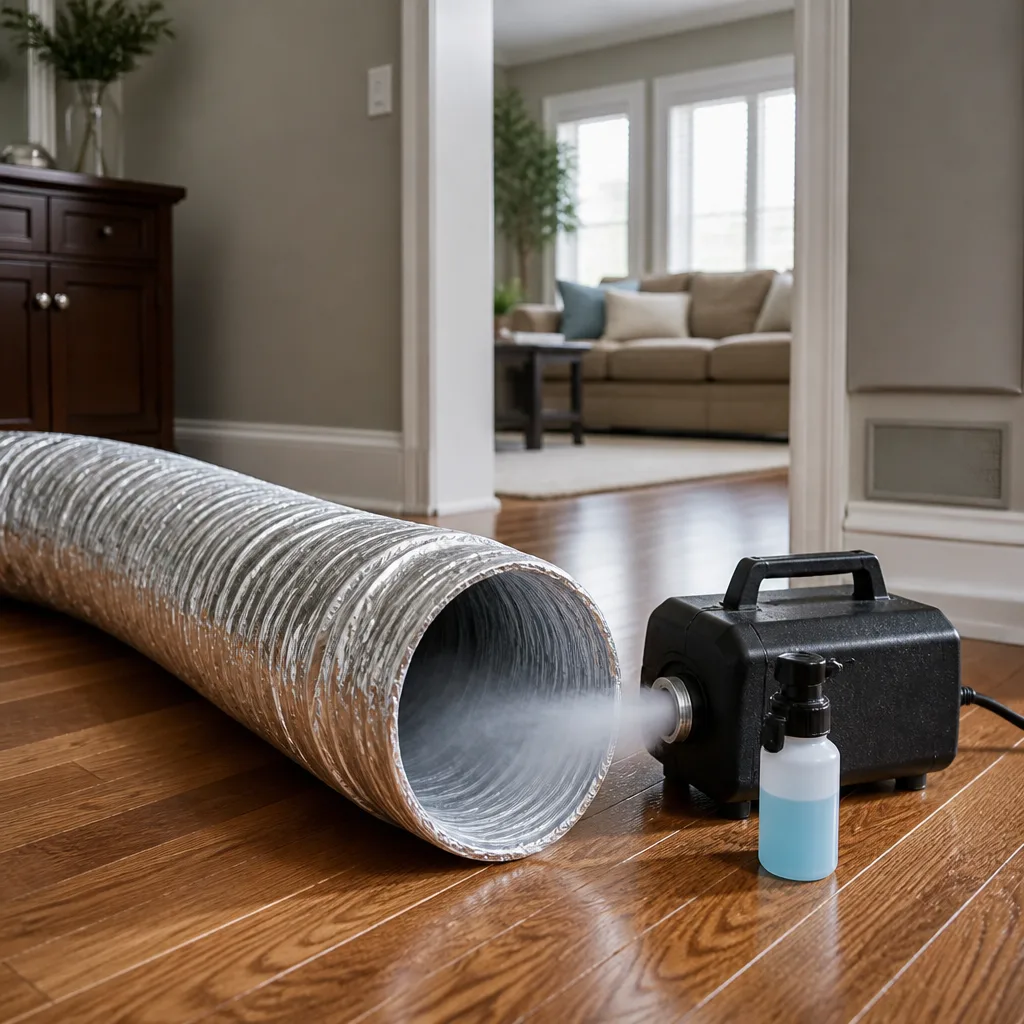 Sanitizing & deodorizing
Whole-system duct and dryer vent check with before-and-after photos - you see exactly what came out of your vents
That "$99 whole-house special" is a bait ad - the real number appears once they are in your hallway, or the "clean" is a shop-vac at the register. We photograph the inside of your ducts before and after instead.
Air Duct Cleaning Permits, Codes & Inspections in Centennial, CO: What You Need to Know
Here’s the part most homeowners don’t expect: the cleaning itself usually needs no permit at all, but the duct repair and sealing that often follows it can. A Centennial homeowner who has flex duct reconnected and sealed after a cleaning can find out at closing that the work needed a mechanical permit, and end up escrowing money to have it looked at again. The gap between “we cleaned your ducts” and “we changed your ducts” is where the paperwork lives. This guide walks through what triggers a permit in Centennial, how Arapahoe County handles mechanical inspections, what sealing has to do with Colorado energy code, and exactly which documents to keep so a future sale doesn’t stall.
Quick Answer
Air duct cleaning on its own does not require a permit in Centennial, Colorado. Duct repair, replacement, reconnection, or new sealing that alters the mechanical system generally does require a mechanical permit through the jurisdiction that covers Centennial, and that work should be inspected before it’s closed up. If a contractor is only cleaning, ask for before-and-after photos. If a contractor is repairing, ask for the permit number and the inspection sign-off.
Styles & brands we work with
- Whole-home duct cleaning
- Dryer vent cleaning
- Camera inspection
- Sanitizing & deodorizing
Table of Contents
- Cleaning vs. Repair: Where the Permit Line Falls
- Who Has Jurisdiction Over Duct Work in Centennial?
- Which Duct Repairs Trigger a Permit and Inspection
- Duct Sealing, Mastic, and Colorado Energy Code
- What Documentation to Request From a Duct Repair Contractor
- Why Undocumented Duct Work Complicates a Home Sale
- How to Fix Unpermitted Duct Work From a Previous Owner
- What a Mechanical Inspection of Duct Work Actually Looks At
Cleaning vs. Repair: Where the Permit Line Falls
The cleanest way to think about it: cleaning removes material, repair changes the system. A permit is generally tied to the second category. When a technician runs an air duct cleaning job with a rotary brush system and HEPA vacuum, they’re pulling debris out of ductwork that is already there. No new components, no altered airflow path, no permit. When the same technician cuts out a crushed section of flex duct, reconnects a boot that’s pulled loose, or seals a joint that’s been leaking into a crawl space, the mechanical system has changed. That’s the point where a mechanical permit typically enters the picture.
In our experience, the confusion comes from how these two jobs get bundled in a single visit. A homeowner books a cleaning, the technician finds a disconnected run behind a register, and the fix happens the same day. That’s an honest repair, but it’s still a repair, and it still needs to be documented properly. The rule of thumb we’d give any Centennial homeowner:
- Cleaning-only scope: no permit, but ask for photos and a written summary of the system condition.
- Repair, reconnection, or replacement of duct sections: mechanical permit likely required, inspection before close-up.
- Sealing that alters the mechanical system or is done as part of a larger project: verify with the jurisdiction whether a permit is required, since energy code compliance may come into it.
- New duct runs or system redesign: almost always permitted, and often inspected.
Centennial’s housing stock includes a lot of 1970s through 1990s construction alongside newer builds, and the older homes are where we see the most reconnect-after-remodel work. Attic ductwork in this climate takes a beating across the freeze-thaw cycle, and flex duct that was fine a decade ago is often sagging or separated now. The repair is worth doing, and doing it with paperwork is worth the extra step.
Who Has Jurisdiction Over Duct Work in Centennial?
Centennial sits largely within Arapahoe County, and the county is where mechanical permits and inspections are handled for most residential work in the city. That matters because homeowners often assume “the city will handle it” and then discover the permit application runs through a county building department instead. Verification is simple: call the building department that issues permits for your address, give them the scope of the duct work, and ask directly whether a mechanical permit is required.
Colorado has adopted the International Residential Code statewide, and local jurisdictions adopt and amend it with their own requirements. The practical result is that the IRC mechanical chapter covers duct systems, and the jurisdiction with permitting authority over your address applies it. For Centennial addresses, that’s typically Arapahoe County. A few things worth knowing about how this plays out:
- Cleaning is not mechanical work. It doesn’t appear under the IRC mechanical chapter’s permit triggers.
- Duct system alterations do appear. Replacement of duct sections, new runs, and reconfigured connections are the kind of scope a permit reviewer recognizes.
- The contractor pulls the permit. In nearly every case, the licensed contractor performing the repair is the one who applies, and the homeowner should receive the permit number before work starts.
- Inspections happen before walls or attic access close up. An inspection that can’t see the work gets failed or rescheduled, which is why timing matters.
Duct Cleaning Centennial connects Centennial homeowners with independent local professionals who perform this work. Our role on a cleaning visit is to identify what’s wrong; the licensed professional handles the permit when repair scope comes up. The point is not to make permitting sound complicated. It’s to keep you from discovering the requirement at the wrong moment, the way the homeowner in the closing scenario did.
Which Duct Repairs Trigger a Permit and Inspection
The trigger is almost always a change to the duct system, not a cleaning of it. Most jurisdictions draw a line at scope that affects the mechanical system’s function or configuration. Here are the repair categories we see most often in Centennial homes, and how each usually lands on the permitting question:
- Reconnecting a disconnected flex duct run. A boot that’s pulled off a register or a run that separated at a junction. Common after remodels. Typically permitted as mechanical work.
- Replacing a crushed or torn duct section. Flex duct collapses over time in unconditioned attic space. Replacement usually requires a permit and an inspection before the new section is closed in.
- Adding a new duct run. Extending service to a finished room or converting a closet. Almost always permitted.
- Rerouting ductwork around a remodel. The scope is mechanical by definition and is reviewed as such.
- Sealing ducts with mastic or approved tape as part of a larger mechanical project. If it’s part of an already-permitted job, the sealing falls under that scope. As a standalone, ask the jurisdiction.
- Patching a small hole in sheet metal. Some jurisdictions treat minor patching as maintenance. Confirm before assuming; it costs one phone call.
If a contractor tells you a repair definitely doesn’t need a permit without knowing your address, that’s a warning sign. Permit requirements vary by jurisdiction and by the specific scope, and anyone who’s genuinely familiar with the code will say “let me confirm” before saying “no.”
Duct Sealing, Mastic, and Colorado Energy Code
Duct sealing is the gray area in this whole conversation, and it deserves its own section. Sealing ductwork with mastic or approved metal tape looks like a small job, and it is. But in Colorado, duct sealing can intersect with energy code requirements in certain project contexts, particularly when the sealing is part of a larger mechanical project, a renovation, or work that touches the building envelope or the HVAC system.
What “approved tape” means matters here. Standard cloth-backed duct tape is not a code-compliant sealant and loses adhesion in attic conditions within a few summers. Mastic, foil tape rated for the application, and code-listed sealants are the products that hold up. A technician using dryer vent cleaning-grade extraction knows the difference immediately, because the same airflow principles apply. Loose duct tape is a leak. Mastic is a seal.
The reason this ties back to permitting is that a code inspector reviewing permitted mechanical work will look at how the ducts are sealed and whether the sealant meets the standard adopted in your jurisdiction. If duct sealing is done as part of a duct repair that was permitted, the sealing gets inspected along with the repair. If the sealing is done standalone with no permit, the homeowner is trusting the contractor’s word that the work meets code.
In our experience, fully comprehensive duct sealing is best verified against the energy code requirements that apply to the project. That’s why we encourage homeowners to ask:
- What product is being used, and is it code-listed for this application?
- Is this sealing part of a permitted project, or standalone?
- If standalone, does the jurisdiction require anything for this scope?
None of that is designed to make duct sealing sound harder than it is. It’s the opposite. Good sealing is one of the highest-value improvements a Centennial home can get for airflow and efficiency. Doing it with the right product and the right documentation just protects you later.
What Documentation to Request From a Duct Repair Contractor
Before any duct repair work begins, ask for the paperwork up front. The conversation is short and it tells you a lot about who you’re working with. Here’s exactly what to request:
- The permit number. If a permit is required, the contractor should provide it before work starts. Write it down and keep it with your home records.
- The scope of work in writing. Which runs are being repaired, replaced, or sealed. Vague descriptions are the source of most disputes later.
- The inspection sign-off. After the work is inspected and passed, request the inspection record. In most jurisdictions it’s available electronically and can be saved to your file.
- As-built notes for your home file. A simple description of what changed and where. Future contractors will thank you, and so will your inspector.
- Before-and-after photos of the duct interiors. This is a proof point every duct contractor should be able to provide on a repair job. Photos of the actual work done on your system, not stock images.
- Product documentation for any sealant or component installed. Manufacturer spec sheets for sealants and duct materials go in the file.
What we do on every air duct cleaning job is use the professional Rotobrush rotary brush system and Nikro HEPA vacuum equipment, and we document the condition we find. We work with components from Aprilaire and Honeywell when they’re already part of your system, and we use Abatement Technologies air-scrubbing capability where the environment calls for it. None of that substitutes for a permit, but it does mean the person diagnosing the duct system is looking at it with the right equipment. When the diagnosis points to repair, the paperwork question comes next, and any contractor who resists providing it is telling you something.
Why Undocumented Duct Work Complicates a Home Sale
When a home goes on the market, the buyer’s inspector and the buyer’s agent will pull permits on file for the address. If the record shows duct repair or replacement work that was done without a permit, the conversation at closing changes. It’s not about whether the work was done well. It’s about whether there’s a record showing it was inspected, and a seller who can’t produce that record ends up negotiating from a weaker position.
The typical resolution in Centennial and across Arapahoe County is one of a few paths:
- Escrow funds to cover re-inspection. Common when the buyer wants verification before closing.
- Retroactive permit application. The seller works with the jurisdiction to pull the permit after the fact and get an inspection.
- Contractor disclosure plus a credit to the buyer. Simpler but usually costs more at closing.
- Re-doing the work with a proper permit. The cleanest outcome, but the most expensive for a seller who’s already packed.
We’ve spoken with enough Centennial homeowners to see the pattern. Duct work gets bundled into a larger remodel or a “while we’re in there” moment, the cleaning happens, the reconnect happens, and the permit step gets skipped because it wasn’t on anyone’s mental checklist. Two years later, the seller is the one sorting it out.
If you’re preparing to list a home in Centennial and you know duct repair was done at some point, pull the records now. It’s a short process when you know where to look. The county’s permit records are searchable by address, and anything that shows up can be reviewed for completeness before a buyer ever sees it.
How to Fix Unpermitted Duct Work From a Previous Owner
Retroactive permitting is a normal process, not a red flag. A homeowner who discovers undocumented duct work can almost always fix it with a phone call to the jurisdiction and a licensed contractor. Here’s the general path:
- Start with the jurisdiction that has authority over the address. For most Centennial addresses, that’s Arapahoe County. They’ll tell you what was permitted and when.
- Describe the existing duct work. Bring photos if you have them. The building department will tell you what a permit for retroactive approval would cover.
- Hire a licensed contractor to pull the permit. In most cases, the permit is filed by the contractor performing the verification or any corrective work.
- Schedule the inspection. The inspector reviews the work as it exists. If something doesn’t meet the current code adopted in your jurisdiction, it may need to be corrected. That’s the honest answer and it’s better to know before closing.
- Save the sign-off and the as-built notes. Same file as the rest of your home records.
The one thing to avoid is assuming a previous owner’s work was fine because the ducts look fine. Duct systems are hidden. The visible parts, the register boots, look identical whether or not the work was permitted. The paperwork is the only reliable proof.
What a Mechanical Inspection of Duct Work Actually Looks At
A mechanical inspection of duct work isn’t a cleaning. The inspector is verifying that the duct system as installed meets the mechanical code adopted in your jurisdiction. That means checking several things:
- Material and construction. Duct materials and connections meet code requirements.
- Support and sealing. Duct runs are supported properly and joints are sealed with approved sealant.
- Clearance to combustibles. Duct work maintains the required clearance from heat sources.
- Airflow and configuration. Runs are configured as documented on the permit application.
- Access for future work. The system can still be cleaned and serviced after the repair is closed up.
The inspection usually happens before the ductwork gets closed behind drywall or attic access panels. That’s why timing matters and why the contractor pulls the permit early. A repair that’s fully sealed up before the inspector arrives either gets torn back open or rescheduled, and both cost time.
We’re careful not to substitute cleaning for inspection or inspection for cleaning. The professional technicians we connect you with have up to 10 years of experience on duct systems, and that experience includes knowing what inspectors look for. When a Centennial homeowner asks us what to expect, we tell them: expect a thorough look at the sealed connections, the clearances, and the configuration. Expect the inspector to want to see the work, not just a photo of it.
Common Mistakes to Avoid
- Assuming cleaning and repair are the same thing on a permit. Cleaning removes debris. Repair changes the mechanical system. Only the second one typically touches permitting, and treating them as one thing is how the paper trail gets lost.
- Hiring a duct contractor who won’t say whether a permit is required. A specific “yes, no, or let me confirm” is the right answer. A vague “we don’t need one” without asking your address is a warning sign.
- Skipping the inspection before sealing things up. An inspection that can’t see the work gets failed or rescheduled. Ask the contractor to schedule the inspection before the repair is closed in.
- Using cloth-backed duct tape as a permanent seal. It’s not a code-compliant sealant for duct work, and it fails in attic conditions within a few summers. Mastic and approved foil tape are the products that hold.
- Not keeping the permit number and sign-off in your home file. The document you’ll want at a home sale is the one you didn’t keep. It’s a five-minute task when the repair is fresh.
- Assuming a previous owner’s duct repair was permitted. Duct systems are hidden. The register boots look identical either way. Pull the permit records by address before a sale.
- Ignoring the attic duct inspection during other maintenance. Attic ductwork in Centennial takes freeze-thaw punishment across the year. A duct run that’s fine in summer can separate by winter. Include it in your routine check.
See the difference
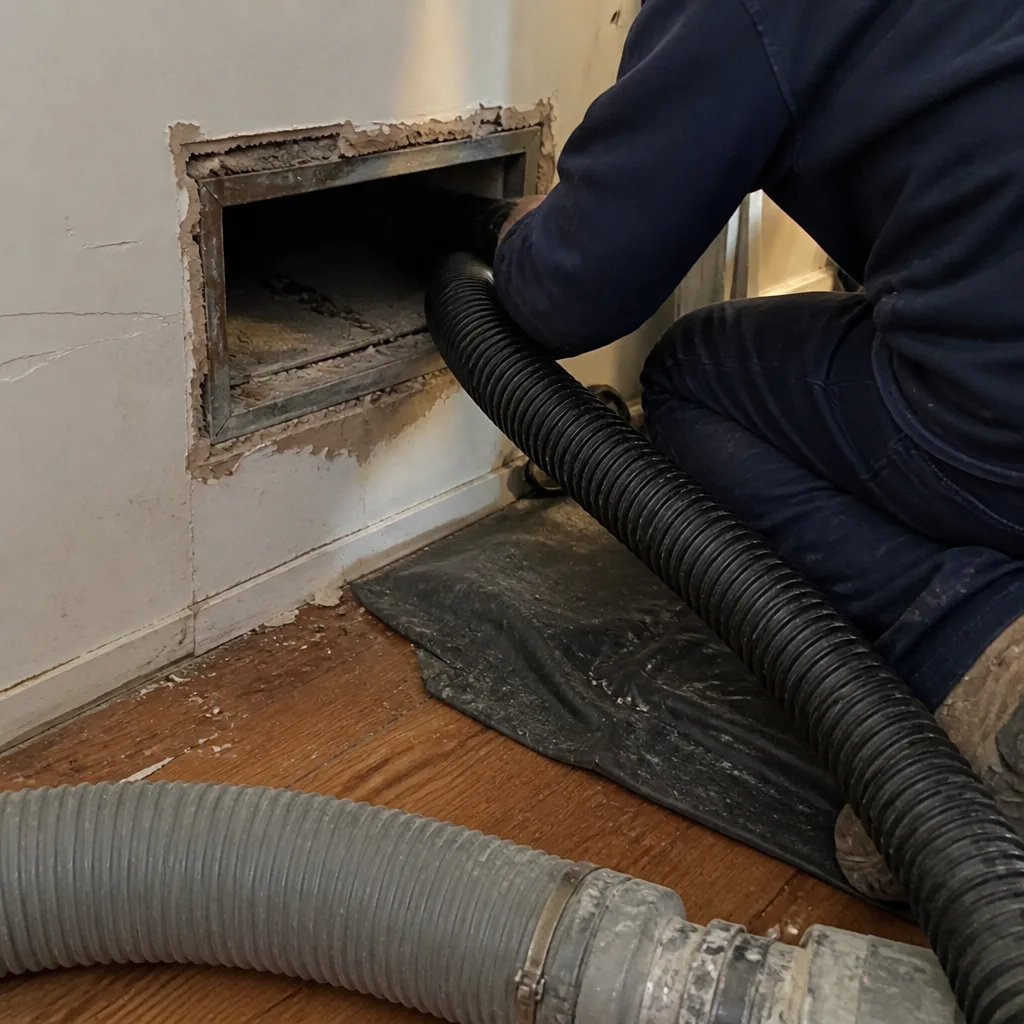 Before
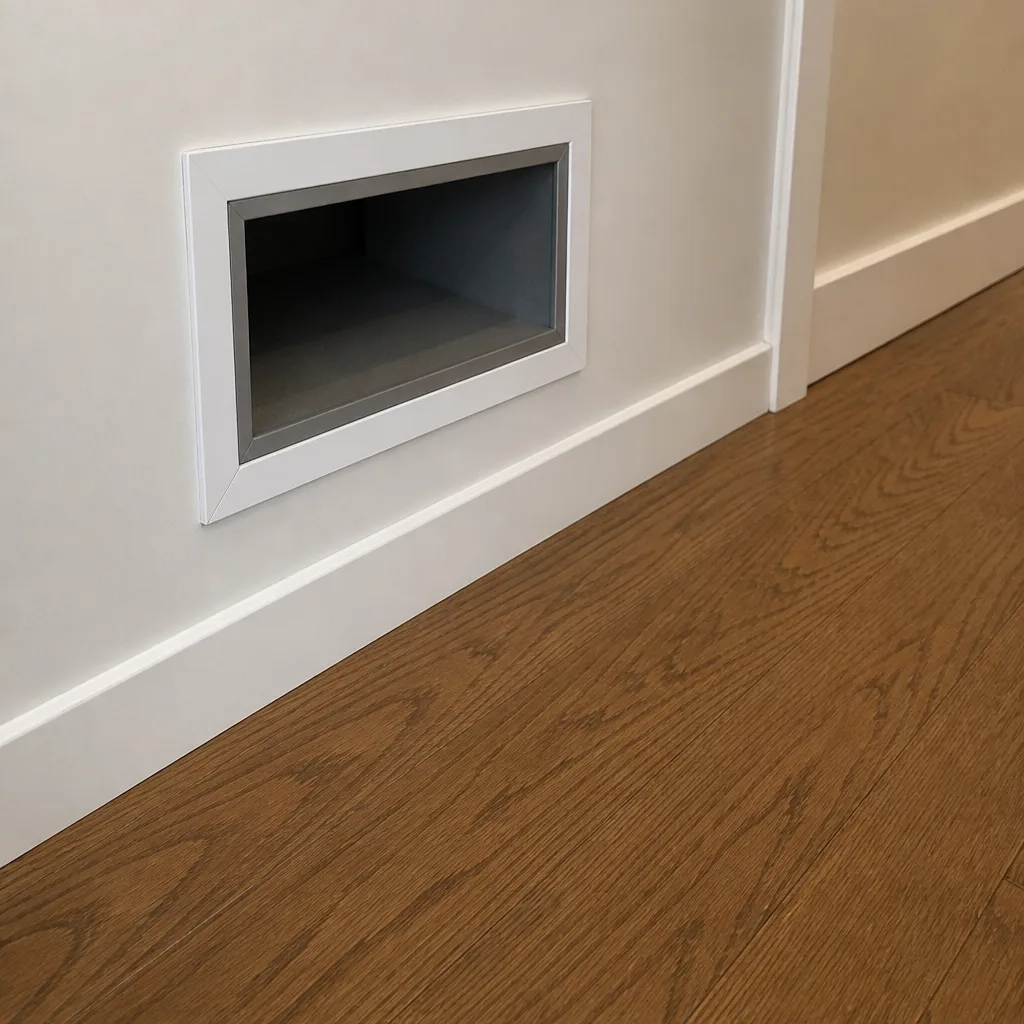 After
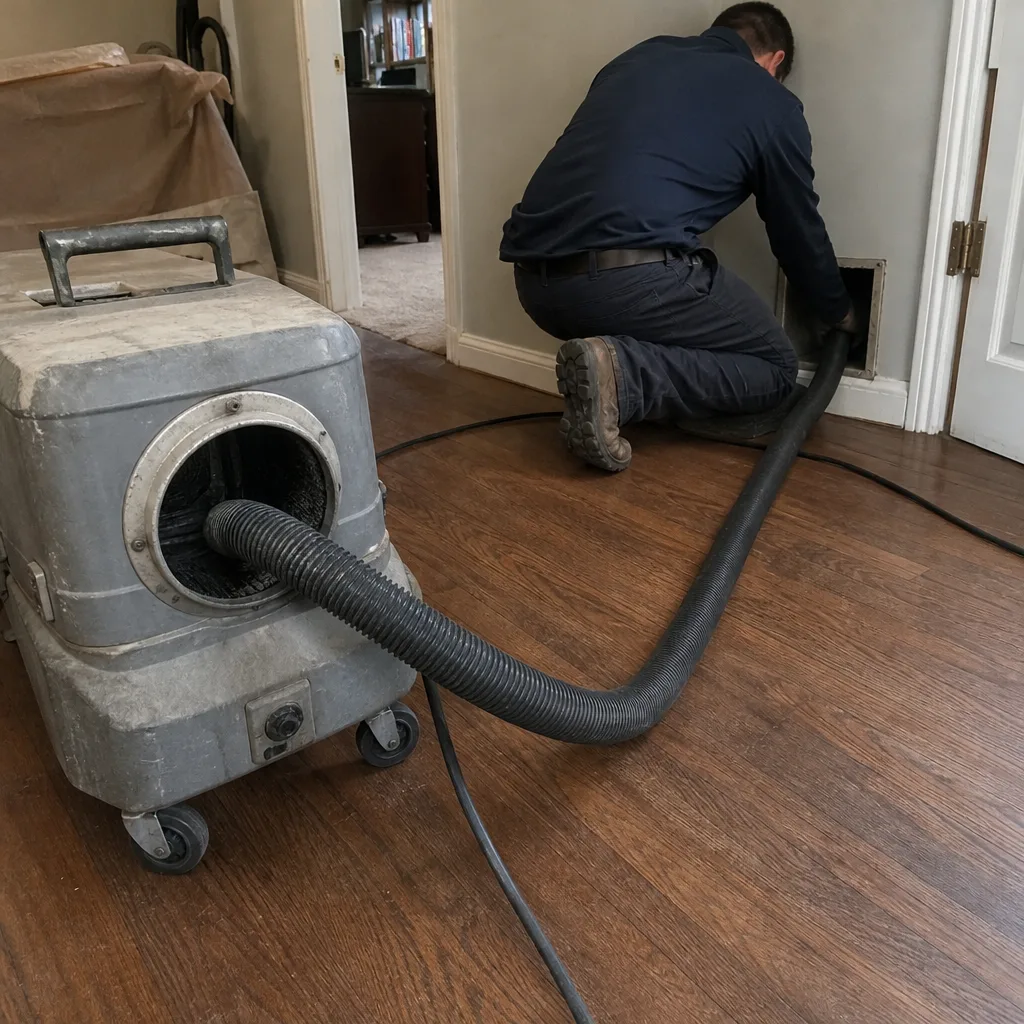 Before
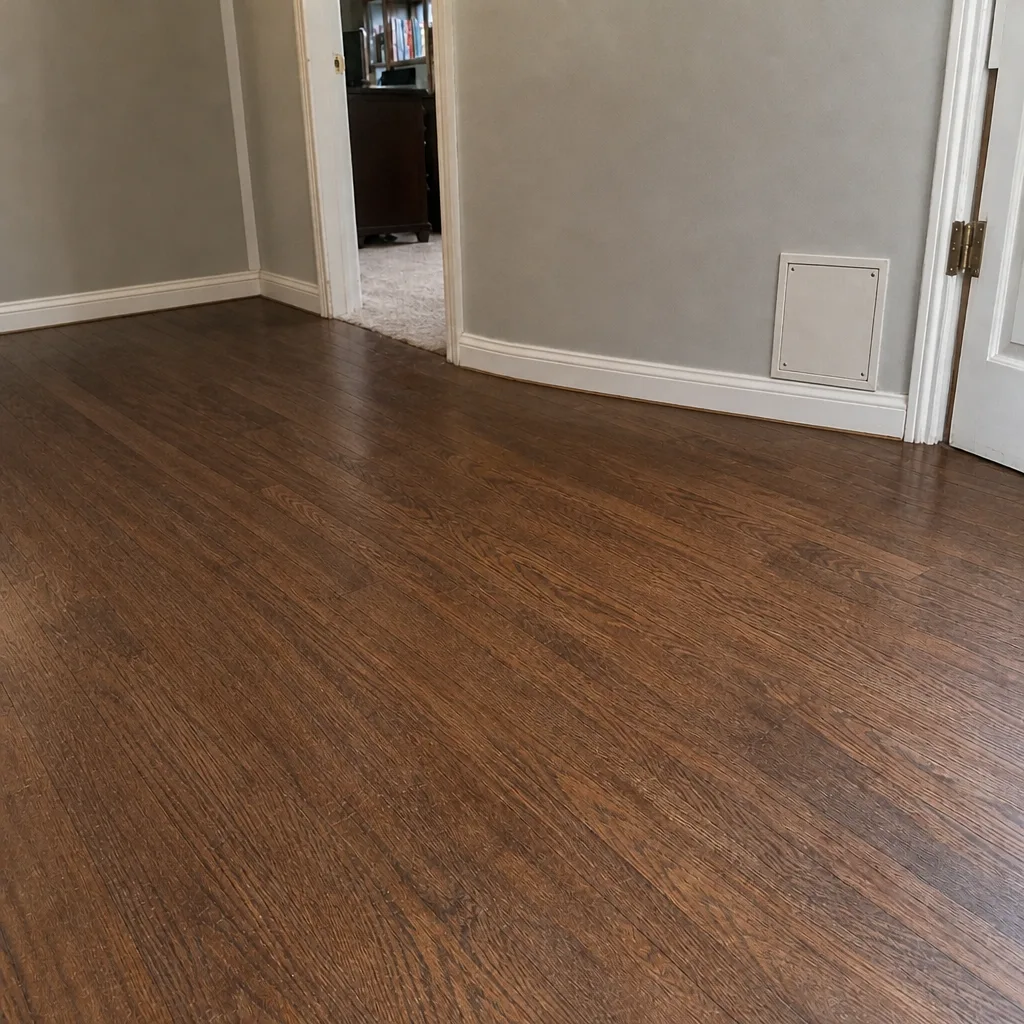 After
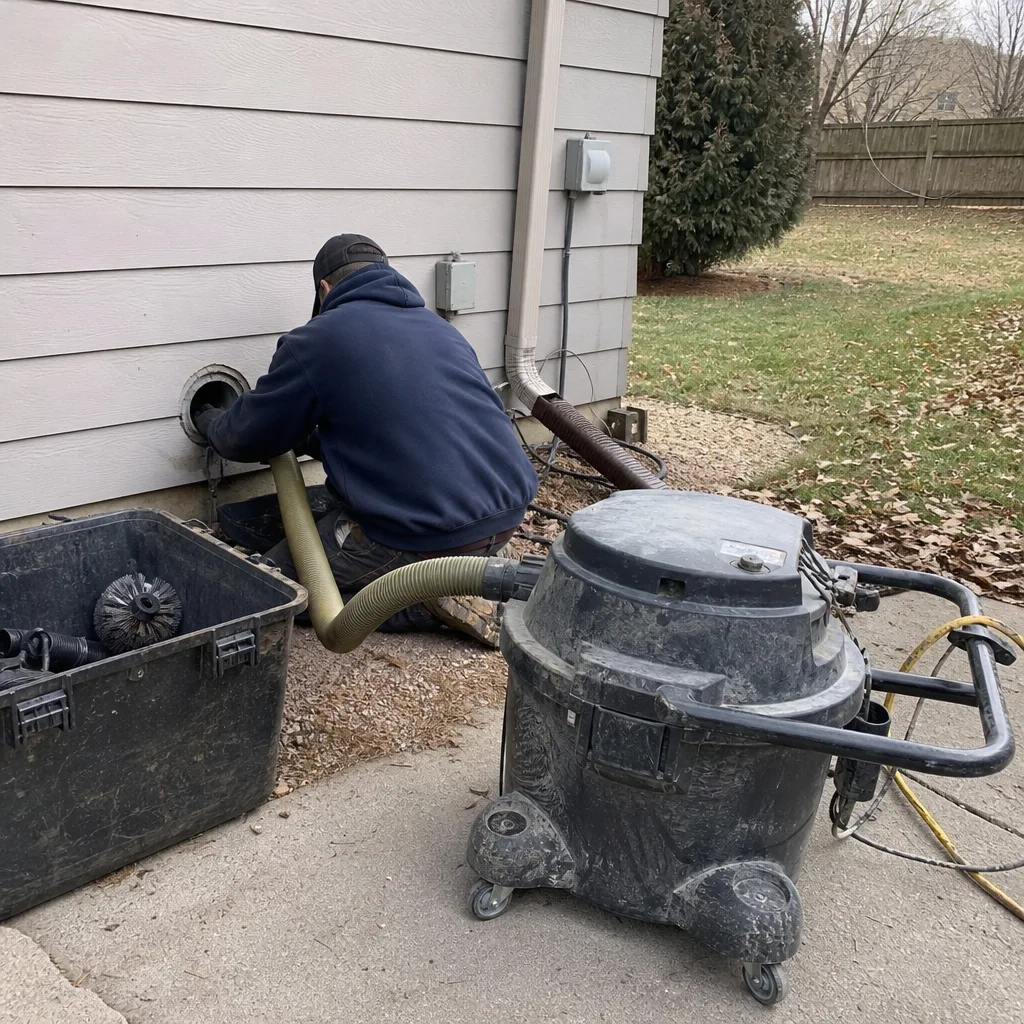 Before
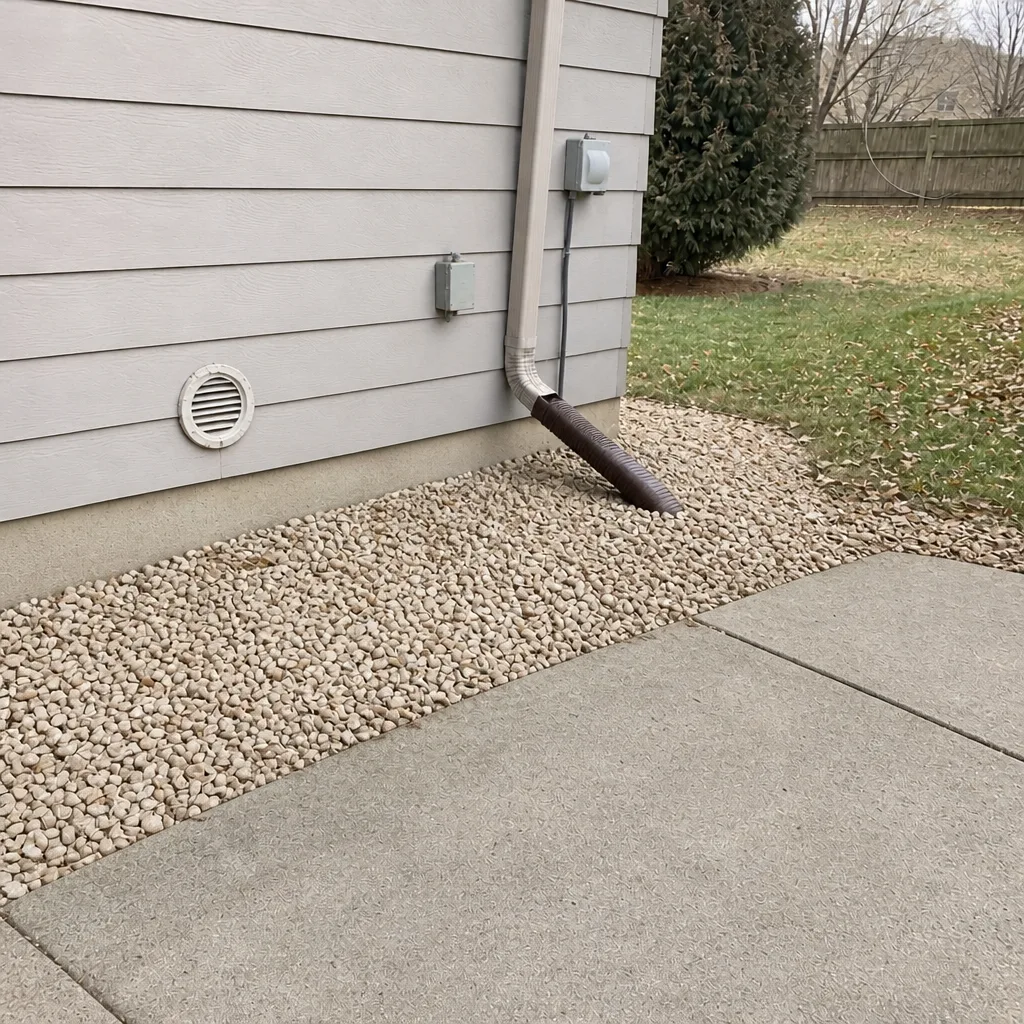 After
When to Call a Professional
Call a professional when the repair scope goes beyond patching a single visible hole. A disconnected run, a crushed section, a boot pulled off a register, or ductwork that needs to be sealed with approved sealant is work for a licensed contractor who can pull the permit and get it inspected. Call when you’re preparing to sell a Centennial home and can’t find permit records for duct work done by a previous owner. Call when you’re planning a remodel that will reroute ductwork. Call when a cleaning visit turns up a repair the technician wants to make on the spot; that’s the exact moment to stop and ask about permit scope. Duct Cleaning Centennial offers free estimates in Centennial; call (888) 597-0329 for a scope assessment and a clear answer on what’s permitted.
Frequently Asked Questions
No. Air duct cleaning does not require a permit in Centennial. Cleaning removes debris from existing ductwork without altering the mechanical system, and the adopted residential code’s permit triggers don’t apply to cleaning alone. If the visit turns up a repair that requires changing or reconnecting ductwork, that repair may require a mechanical permit, and the contractor performing it should confirm the requirement with the jurisdiction that covers your address before starting work.
For most Centennial addresses, mechanical permits are issued through Arapahoe County, which has permitting authority over the majority of the city. Verify by calling the building department that issues permits for your specific address and describing the scope of duct work in plain language. They’ll tell you whether a permit is required and what the application process looks like. If you’re near a county line, confirm jurisdiction before assuming which department handles it.
It can, depending on the project context. Colorado has adopted the International Residential Code, and local jurisdictions apply and amend it. Duct sealing done with mastic or code-listed foil tape as part of a permitted mechanical project gets inspected with that project. Sealing done standalone may or may not be regulated in your jurisdiction, which is why confirming before the work is the safe path. Cloth-backed duct tape is not a code-compliant sealant for duct work in either case.
Keep four things: the permit number, the written scope of work, the inspection sign-off, and as-built notes describing what changed. Add before-and-after photos of the duct interiors to the same file. These documents matter most at home resale, when a buyer’s inspector will pull permit records by address. A file with all four items makes the sale-side conversation short.
Yes. Retroactive permitting is a standard process. Start by calling the jurisdiction that has authority over your address (Arapahoe County for most of Centennial) and requesting the permit records. They’ll tell you what’s on file and what a retroactive permit for the existing work would cover. A licensed contractor pulls the permit and schedules the inspection. Corrections may be required if the existing work doesn’t meet the code your jurisdiction has adopted, and it’s better to find that out before listing the home.
The inspector verifies that the installed duct system meets the mechanical code adopted in your jurisdiction. That includes checking materials, connections, support, sealing with approved products, clearance to combustibles, and configuration as documented on the permit application. The inspection generally happens before the ductwork is closed in. If the repair hasn’t been documented or is closed up before inspection, expect a fail or a reschedule, and both cost time.
No. Cleaning and inspection are separate processes. A cleaning visit removes debris from existing ductwork; a mechanical inspection verifies code compliance of installed work and is performed by the jurisdiction’s inspector. In our experience, homeowners sometimes conflate the two because both involve someone looking at the ducts. The distinction matters when you’re selling the home and a buyer wants permit records, because a cleaning record doesn’t substitute for an inspection sign-off.
Reconnecting a disconnected flex duct run is mechanical work, and in most cases it requires a mechanical permit through the jurisdiction that covers your address. It’s a short application, and the inspection is straightforward if the work is visible. The bigger risk is skipping the permit and discovering at home sale that the reconnect is undocumented. If a Centennial contractor offers to reconnect without confirming the permit requirement first, ask them to verify before starting the work.
The Bottom Line
Air duct cleaning doesn’t require a permit in Centennial. Duct repair, replacement, reconnection, and most sealing work generally does, and the paperwork lives with Arapahoe County for most of the city. The measure of a good duct contractor is not only the quality of the clean. It’s whether they know where the permit line falls, pull the permit when it applies, schedule the inspection before the work is closed up, and hand you the documentation afterwards. If you’re hiring a Centennial contractor for cleaning, ask for before-and-after photos. If you’re hiring one for repair, ask for the permit number and the sign-off. If you’re preparing to sell, pull the permit records by address now, not at closing.
Get a Free Estimate
Duct Cleaning Centennial works with professional-grade Rotobrush and Nikro equipment on every job, and we scope each visit to sort cleaning scope from repair scope before the work begins. Our technicians have up to 10 years of experience with duct systems, and we’ll tell you honestly when a repair requires a mechanical permit and an inspection. Call (888) 597-0329. We answer 24/7. Fast dispatch from 7am to 7pm, Sunday through Friday. Estimates are free, and you’ll get a written estimate before any work starts. If you’re in the Centennial area and want a clear answer on what your duct work needs, start with a call. We clean ducts. That’s it. That focus means your technician has seen every duct configuration imaginable and knows exactly when the paperwork matters. Visit Duct Cleaning Centennial for the full scope of what we do.
Written by the team at Duct Cleaning Centennial.